
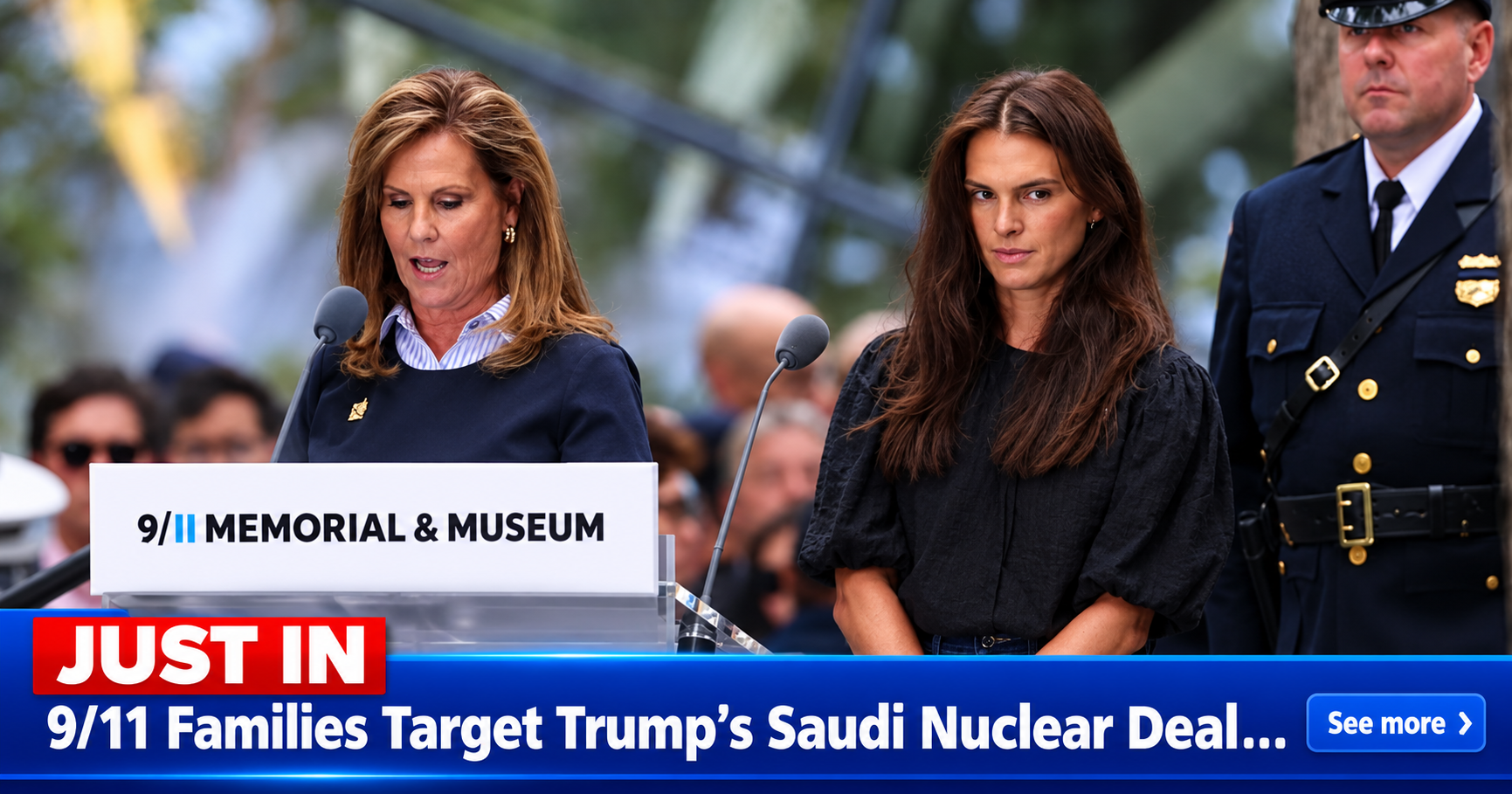
The families’ campaign comes as Congress separately examines the same nuclear agreement, with senators raising concerns about transparency and the disclosure of related documents.

NEW YORK CITY, NEW YORK: Twenty-five years after the September 11 attacks, some victims’ families are taking their fight over Saudi Arabia into a new arena: President Donald Trump’s proposed nuclear cooperation agreement with Riyadh.
The families say they could use the agreement’s review process to pressure Saudi Arabia over what they allege are ties between Saudi officials and the 9/11 attacks. The move puts the multibillion-dollar civilian nuclear program under renewed political scrutiny as senators separately press the administration to disclose confidential documents related to the deal.
The families spoke to the New York Post for a report published Sunday, September 20, expressing strong opposition to the agreement.
Families oppose nuclear deal with Saudi Arabia
For Terry Strada, who lost her husband, Thomas Strada, a bond trader at Cantor Fitzgerald who was killed in the World Trade Center attacks, the fight is about more than another request for documents.
She wants the Saudi government to acknowledge what she and other 9/11 families allege was its role in the attacks.
“How do you give a country nuclear weapons that is responsible for killing 3,000 people and they’ve never owned up to it? They’re not trustworthy. They’re not honest brokers,” Strada, chair of 9/11 Families United, told the New York Post.
Strada said she has spent years seeking accountability from Saudi Arabia and now views the nuclear agreement as another potential avenue for pressure.
The proposed U.S.-Saudi civil nuclear agreement would allow American companies to participate in Saudi Arabia’s nuclear energy program. The agreement is known as a “123 agreement” under Section 123 of the Atomic Energy Act, which establishes a framework for significant U.S. nuclear cooperation with foreign countries.
The families argue that the agreement could provide additional leverage in their long-running efforts to obtain accountability from Saudi Arabia over allegations surrounding the 2001 attacks.
Fifteen of the 19 hijackers were Saudi nationals. Saudi Arabia has repeatedly denied that its government was involved in or supported the attacks. The 9/11 Commission reported that it found no evidence that the Saudi government as an institution or senior Saudi officials individually funded al-Qaeda, while noting that Saudi Arabia was a major source of funding for al-Qaeda.
The families’ campaign comes as Congress is also examining the nuclear agreement from another direction.
Senators seek disclosure of Saudi nuclear documents
A group of senators is pressing the Trump administration to release confidential documents connected to the nuclear agreement, arguing that lawmakers and the public need greater transparency about its terms.
The agreement’s transmission to Congress triggers a review process under Section 123 of the Atomic Energy Act. Congressional Research Service materials explain that Congress has 90 days of continuous session to review a 123 agreement, and Congress can seek to block an agreement through a joint resolution of disapproval during the review period.
That process provides lawmakers with a formal avenue to examine the agreement while the 9/11 families separately seek to connect the nuclear deal to their longstanding demands for accountability.
Sen. Richard Blumenthal, who has repeatedly advocated for the release of records concerning Saudi Arabia and the 9/11 attacks, has also raised concerns about the agreement and the families’ demands.