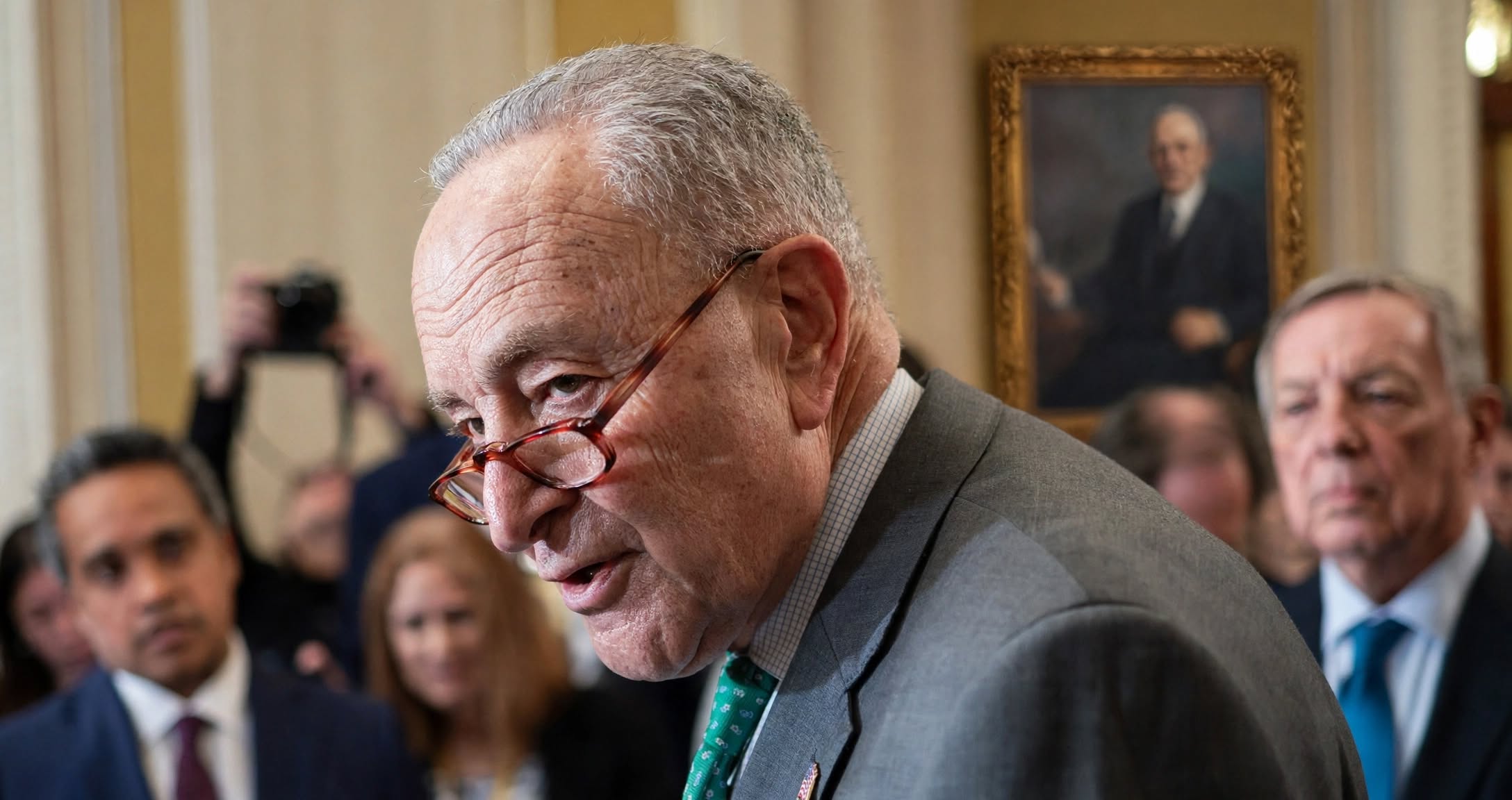
Chuck Schumer says Democrats have an opportunity to engineer a generational political realignment, targeting Republican strongholds after their midterm victories.
The Senate Democratic leader outlined ambitions beyond congressional control, including winning Texas and Iowa in the next presidential election.
Speaking with MS NOW’s Lawrence O’Donnell, Schumer described his objective as “a generational remaking of the map.”
His argument was about turning Democratic breakthroughs into lasting electoral strength, with incoming senators helping change perceptions of the party.
“So two years from now, we can win the presidency in Iowa. We can win the presidency in Texas. We can win new Senate seats there,” he claimed.
Those statements make clear that Schumer views the midterms as a foundation for expanding Democratic power in 2028 and beyond.
For Republicans, the warning is that Democrats intend to challenge the political assumptions that have protected some traditionally conservative states.
Schumer specifically pointed to Texas and Kansas as places where Democratic officeholders could establish identities tailored to their home states.
He argued that voters should see those officials directly, rather than encounter Democrats only through portrayals on Fox News.
That strategy relies on incoming senators translating campaign victories into records that persuade voters to keep supporting the party.
Schumer acknowledged that Democrats must deliver for Americans, presenting performance in office as essential to sustaining their new opportunities.
But he called for party unity, arguing that internal leadership disputes should not displace the confrontation with President Donald Trump.
“The issue is unity, fighting together,” he said.
The interview included questions about Democrats who want a different Senate leader, including incoming Maine Sen. Troy Jackson.
O’Donnell said Jackson had told Schumer that he would prefer supporting somebody else for the position.
Schumer: I’m not the issue. It’s staying together on what the American people care about so we can have that generational remaking of the map. That’s the key issue here. https://t.co/wJTkur6VHw
Schumer responded by recalling that his message to candidates during their campaigns was to win their races.
He said defeating Trump and Republican senators should remain the focus, rather than Democrats fighting one another.
That appeal tied Schumer’s defense of his leadership directly to his vision of a more geographically competitive national Democratic Party.
He compared himself to an orchestra leader, selecting a common theme while showcasing colleagues with different strengths.
Schumer identified that theme as costs, chaos, and corruption, saying candidates adapted the message to their own states.
He accused Trump of corruption and blamed administration policies for economic pressure, immigration-related turmoil, and disruption connected to the war.
Those accusations formed the Democrats’ campaign argument, which Schumer credited with helping the party compete across a wider battlefield.
He said soybean tariffs suggested an opening in Iowa, while northern-border issues helped shape his thinking about Maine and Alaska.
Ohio’s proliferation of data centers also entered his assessment of where Democrats could compete, according to his account.
Schumer then described recruiting candidates whom he believed could connect those national themes with local concerns.
He said he urged Mary Peltola to run in Alaska and approached Roy Cooper in North Carolina.
He also discussed recruiting Turek in Iowa and persuading former Ohio Sen. Sherrod Brown to return to electoral politics.
Schumer said he twice traveled to Columbus to speak with Brown and his wife, Connie, about another campaign.
He recalled arguing that retirement would be difficult to enjoy if Democrats lost Senate control by a single seat.
According to Schumer, the couple called the following day and said Brown would run for the Senate.
He characterized those decisions as patriotic, repeatedly presenting Democratic recruitment as a mission to save the country.
Mississippi also figured in his account, with Schumer saying he had encouraged Scott Colom to seek the seat for years.
This article may contain commentary which reflects the author’s opinion.