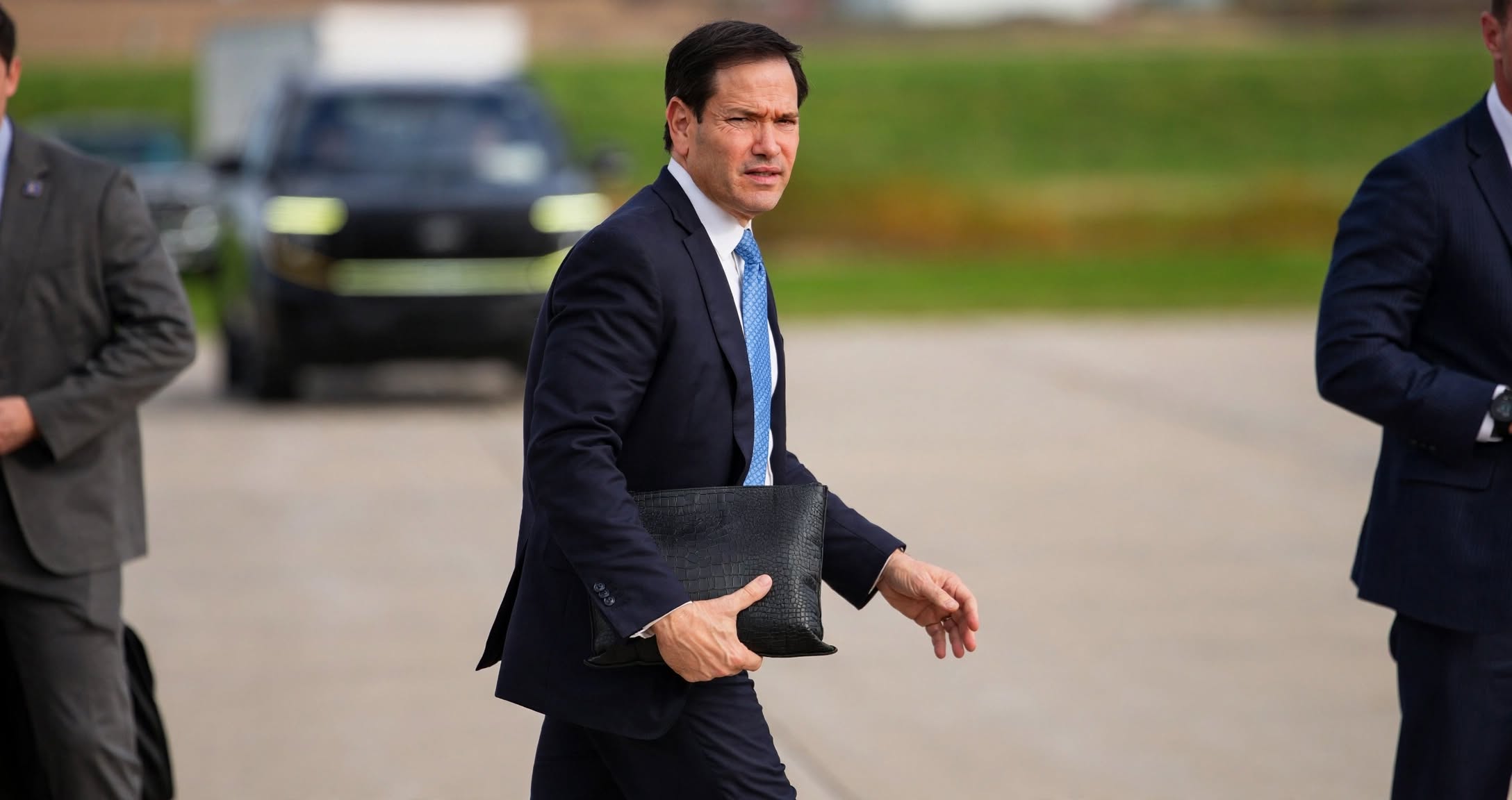
Secretary of State Marco Rubio says President Trump prefers a peaceful resolution with Iran while confident America can succeed militarily.
The message pairs a diplomatic opening with military readiness as reports suggest both sides could be preparing additional strikes.
Rubio told reporters over the weekend that Trump had not decided on military action, according to CNBC.
He emphasized that the president believes American forces have the capabilities and resources needed if a military response becomes necessary. “But we would prefer to do it peacefully.”
Rubio’s remarks came as the U.S. launched new strikes overnight against Iranian targets.
President Donald Trump confirmed Friday that U.S. forces carried out another round of limited strikes against Iran, targeting an air-defense system near the strategically important Strait of Hormuz.
Trump characterized the military action as “minor” while speaking with reporters after arriving in West Palm Beach, Florida.
“They built a little bit of an anti-aircraft device and we knocked it out in about 15 minutes, maybe five.”
Trump offered few additional details about the operation, which targeted Iranian military infrastructure on or near Qeshm Island.
Iranian state media reported that two missiles struck the Suza area of Qeshm Island, although Iranian officials had not immediately provided information about damage, The Hill reported.
Trump reinforced his message with remarks reported by Just The News, presenting an agreement and further action as competing possibilities.
“We’ve had such a victory, and we’ll put it away very soon, one way or the other. Either they’ll make a deal, or we’ll just end it,” he said.
The president’s language conveyed urgency, although the quoted remarks did not establish a specific date for reaching an agreement.
Rubio likewise described negotiations as continuing, keeping open the possibility that diplomacy could deliver the outcome Washington wants.
For Americans concerned about another prolonged conflict, the stated preference for a peaceful resolution is significant.
The administration is publicly presenting military strength as leverage while leaving room for an agreement that avoids additional fighting.
That approach gives Republicans a straightforward argument: seeking peace does not require signaling that the United States lacks options.
It also places responsibility on the administration to explain how diplomatic progress and military preparations fit together as events develop.
Iran has designated United Kingdom military intelligence a hostile group, adding another point of friction involving a major American ally.
That move forms part of the confrontation, though it does not establish whether Tehran will accept a negotiated settlement.
The question remains whether the parties can reach terms before either side chooses another round of military action.
Energy markets have provided an indication of how closely the conflict is being watched beyond diplomatic and military circles.
Just The News reported that oil prices fell more than 6% following Rubio’s comments and signs of progress in talks.
The reported decline accompanied those developments, rather than proving that any single statement caused the entire market move.
For households and businesses, the direction of energy costs gives the negotiations an economic significance extending well beyond foreign policy.
Oil prices can influence transportation and production expenses, making concerns about the conflict relevant to everyday American budgets.
An improvement in security would offer a firmer foundation for confidence than headlines suggesting a temporary opening between the parties.
The administration’s challenge is turning its preference for peace into terms that address American interests and can withstand renewed pressure.
Rubio’s public formulation leaves both paths available: negotiations continue, and the United States remains prepared if military action is required.
His confidence in American capabilities is therefore part of the diplomatic message, rather than an announcement that war must escalate.
Fox News described the balance in similar terms, reporting that Trump prefers peace with Iran but is prepared for war.
The secretary did not present a completed settlement or announce that Tehran had accepted Washington’s terms.
Instead, he described a president weighing options while expressing confidence that America possesses the means to act, CNBS reported.
That leaves the coming decisions consequential for American forces, regional stability, allied governments, and businesses exposed to energy uncertainty.
This article may contain commentary which reflects the author’s opinion.