Minnesota’s massive government fraud scandal has emerged as a major issue in the state’s closely watched Senate race, with Republicans hoping voter frustration could help them capture a seat Democrats have controlled for decades.
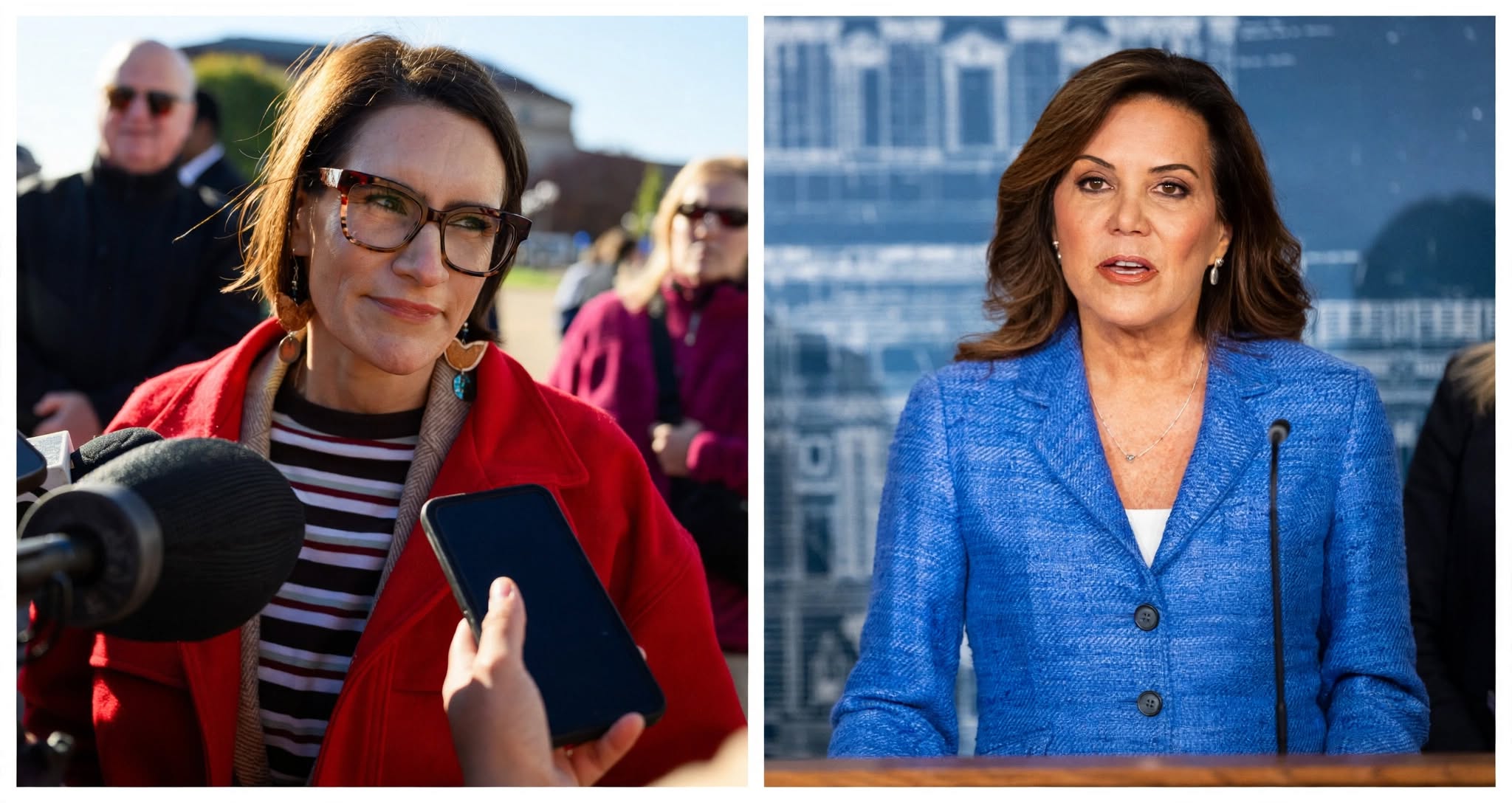
NBC News chief data analyst Steve Kornacki highlighted the contest during a Wednesday appearance on “TODAY,” explaining how Republican Michele Tafoya is attempting to capitalize on the controversy surrounding Democratic Gov. Tim Walz’s administration.
Tafoya, a former longtime NFL sideline reporter, is challenging Democratic Lt. Gov. Peggy Flanagan for the Senate seat being vacated by retiring Sen. Tina Smith.
Republicans have not won a Minnesota Senate election since 2002, making the contest an important test of whether the state’s political landscape is shifting.
Kornacki identified Minnesota’s sprawling social-services fraud scandals as a potentially consequential issue for Democrats.
“What they think is working in their favor here is there’s a state scandal there about Medicaid fraud,” Kornacki said.
The controversy involves multiple fraud investigations targeting taxpayer-funded programs, including schemes that allegedly diverted hundreds of millions of dollars intended for vulnerable residents.
The most notorious case involved Feeding Our Future, a nonprofit organization at the center of a roughly $250 million fraud scheme involving federal child-nutrition assistance during the COVID-19 pandemic.
Numerous defendants have been convicted, while investigators and lawmakers have questioned whether Minnesota officials adequately responded to warnings about suspicious payments.
Kornacki emphasized that Flanagan’s longtime partnership with Walz has provided Tafoya with a prominent campaign issue.
“There does seem to be a tie within the state that might be working against Democrats,” Kornacki said.
Flanagan has served as Minnesota’s lieutenant governor throughout Walz’s administration, making her a central figure in the state’s Democratic leadership.
Tafoya has repeatedly argued that the lieutenant governor cannot separate herself from controversies that unfolded during her eight years in office.
The issue sparked a confrontation during the candidates’ October 16 debate.
Flanagan acknowledged that Walz accepted responsibility for failures in government oversight, saying the governor had made clear that “the buck stops with him.”
However, she maintained that direct supervision of the affected programs was not among her responsibilities.
Tafoya challenged that explanation, accusing her Democratic opponent of embracing the administration’s accomplishments while distancing herself from its failures.
“This historic fraud happened under her watch,” Tafoya declared.
The Republican has made government accountability, affordability and the misuse of taxpayer money central themes of her campaign.
Flanagan has countered by highlighting her experience in state government and warning that Tafoya would support President Donald Trump’s agenda in Washington.
Recent polling illustrates both the competitive nature of the contest and the challenges facing Republicans.
A Rasmussen survey conducted October 20-21 found Flanagan leading 48% to 45% among 1,182 likely voters, within the poll’s three-point margin of error.
A Star Tribune/KARE 11 survey conducted October 5-7 showed Flanagan ahead 47% to 43%, with 9% undecided.
More recent polling has shown a wider Democratic advantage.
A New York Times/Siena survey conducted October 19-26 placed Flanagan ahead 54% to 40%, while an October 24-28 SurveyUSA poll showed her leading 48% to 41%.
The RealClearPolitics average through October 28 showed Flanagan at 48.3% and Tafoya at 42.5%, a 5.8-point advantage.
Minnesota’s political history also presents a significant obstacle for Republicans, who have not won a statewide election since 2006.
Still, the fraud investigations have given Tafoya a specific issue on which to challenge the Democratic administration’s record.
With Election Day just two days away, Kornacki’s analysis underscores why a race that once appeared less competitive has drawn increasing national attention, with the fallout from Minnesota’s fraud scandals emerging as one of the central issues separating the two candidates.
This article may contain commentary which reflects the author’s opinion.