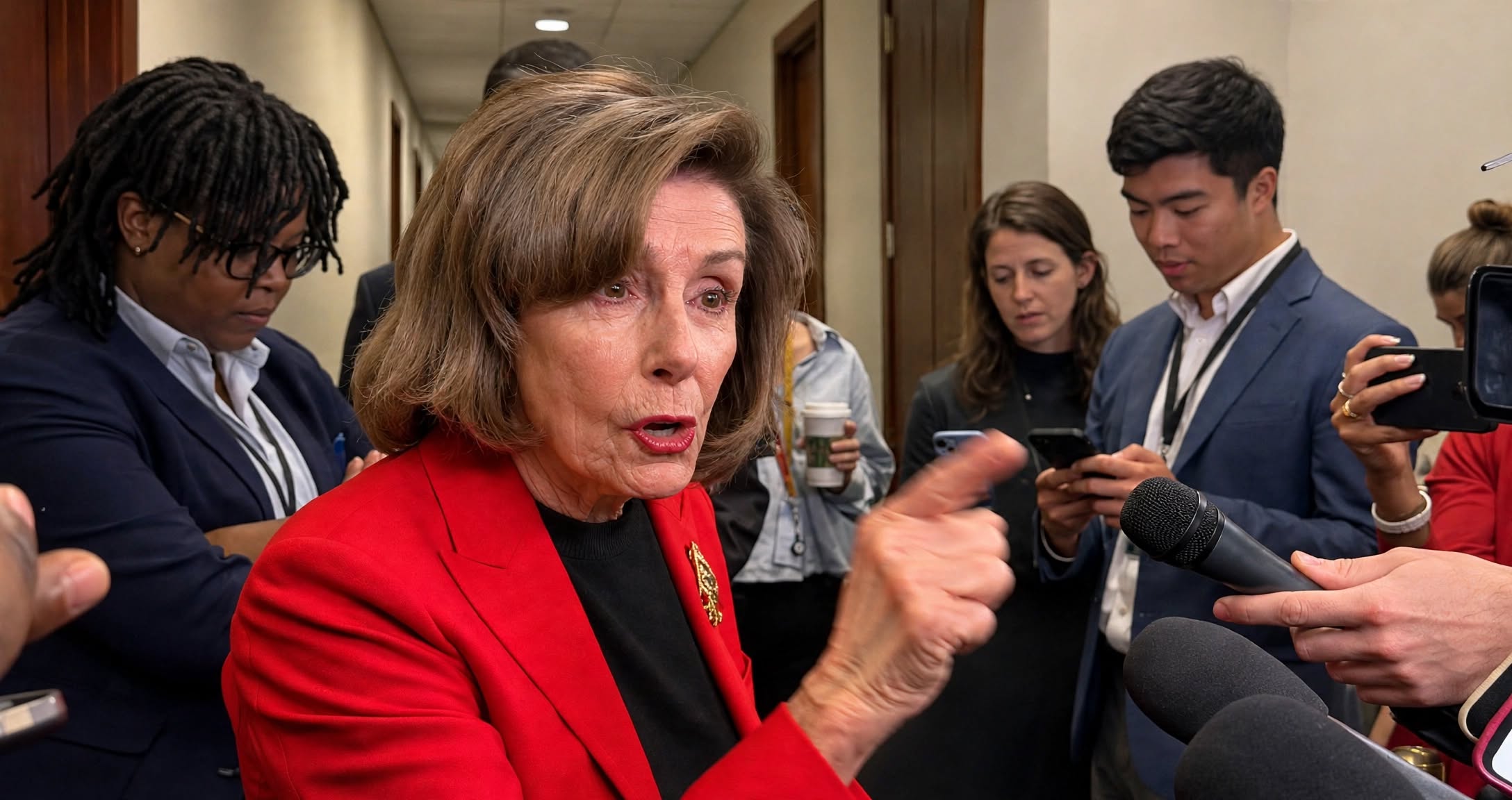
Former Speaker Nancy Pelosi is downplaying divisions within her party, arguing its progressive and mainstream wings share more than their disagreements suggest.
Her explanation centers on how quickly Democrats pursue their priorities, offering Republicans a revealing statement about the party’s direction.
The Democrat said Tuesday that differences between progressives and mainstream Democrats largely concern timing rather than competing objectives.
Speaking during NPR’s election coverage, the California congresswoman rejected the suggestion that deep divisions separate the party’s principal ideological factions.
“There’s tremendous consensus in our party.”
Co-host Mary Louise Kelly challenged that assessment, asking whether Pelosi saw serious disagreement between progressives and the Democratic mainstream.
“You don’t see deep divisions between the progressives and mainstream of your party?”
Kelly’s direct follow-up prompted Pelosi to explain her initial assertion of consensus.
Pelosi answered no, then described the differences as questions about the speed at which Democrats move toward particular goals.
Her response suggested that policies associated with the progressive wing often overlap with work already undertaken by established Democratic leaders.
“Many of the things that they are advocating, we have been doing.”
That statement is the consequential part of her answer for Republicans evaluating whether Democratic factions differ over substance or presentation.
Pelosi did not identify particular proposals during the supplied exchange, instead offering a broad characterization of how her party operates.
Her argument treats disagreements about pace as compatible with substantial agreement about direction, rather than evidence of different political destinations.
For conservatives, that distinction matters when Democrats describe themselves as moderates while campaigning alongside progressives who favor more sweeping changes.
Pelosi’s explanation gives Republicans grounds to ask which progressive priorities mainstream leaders already support and which differences involve only scheduling.
The exchange puts a Democratic voice behind the idea that internal arguments can coexist with an underlying policy consensus.
Kelly’s question specifically contrasted progressives with the mainstream, inviting Pelosi to address a familiar fault line within the Democratic coalition.
Pelosi declined that framing, emphasizing shared work instead of portraying the progressive wing as operating outside the party’s broader agenda.
She then shifted from discussing Democrats to criticizing President Donald Trump and the Republican Party’s relationship with him.
Pelosi accused Republicans of following presidential direction in lockstep, presenting Democrats as a party that does not simply accept orders.
The contrast allowed Pelosi to defend Democratic unity while also claiming room for independence among members with differing political approaches.
Her position was twofold: Democrats agree about their work, but she says that agreement does not require obeying one leader.
Republicans would dispute her characterization of their party, but her answer focused more on assertion than examples from congressional voting.
The supplied exchange contains no discussion of specific Republican defections, Democratic legislative disputes, or individual lawmakers breaking with their leadership.
Instead, Pelosi offered listeners a comparison: Democratic consensus reflects shared priorities; Republican cohesion, she says, reflects loyalty to Trump.
That framing serves a clear messaging purpose during election coverage, reassuring Democratic listeners while directing criticism toward the opposing party.
It also avoids drawing hard boundaries between the establishment and activists pressing it to move faster on their preferred policies.
Pelosi’s statement that Democrats have been doing much of what progressives advocate brings those groups closer together in her view.
That differs from arguing that progressive proposals are unacceptable or incompatible with the party’s mainstream, neither of which she said.
The former speaker instead acknowledged differences while repeatedly returning to the question of timing and how quickly particular actions happen.
Her comments leave unclear which disagreements involve tactics, legislative sequencing, or the practical limits of advancing a proposal through Congress.
They also leave unanswered whether particular progressive demands would receive support from every Democrat, a claim she did not make, Breitbart News reported.
What Pelosi did say was that common ground exists, and that progressives are advocating things Democrats have already been pursuing.
This article may contain commentary which reflects the author’s opinion.