
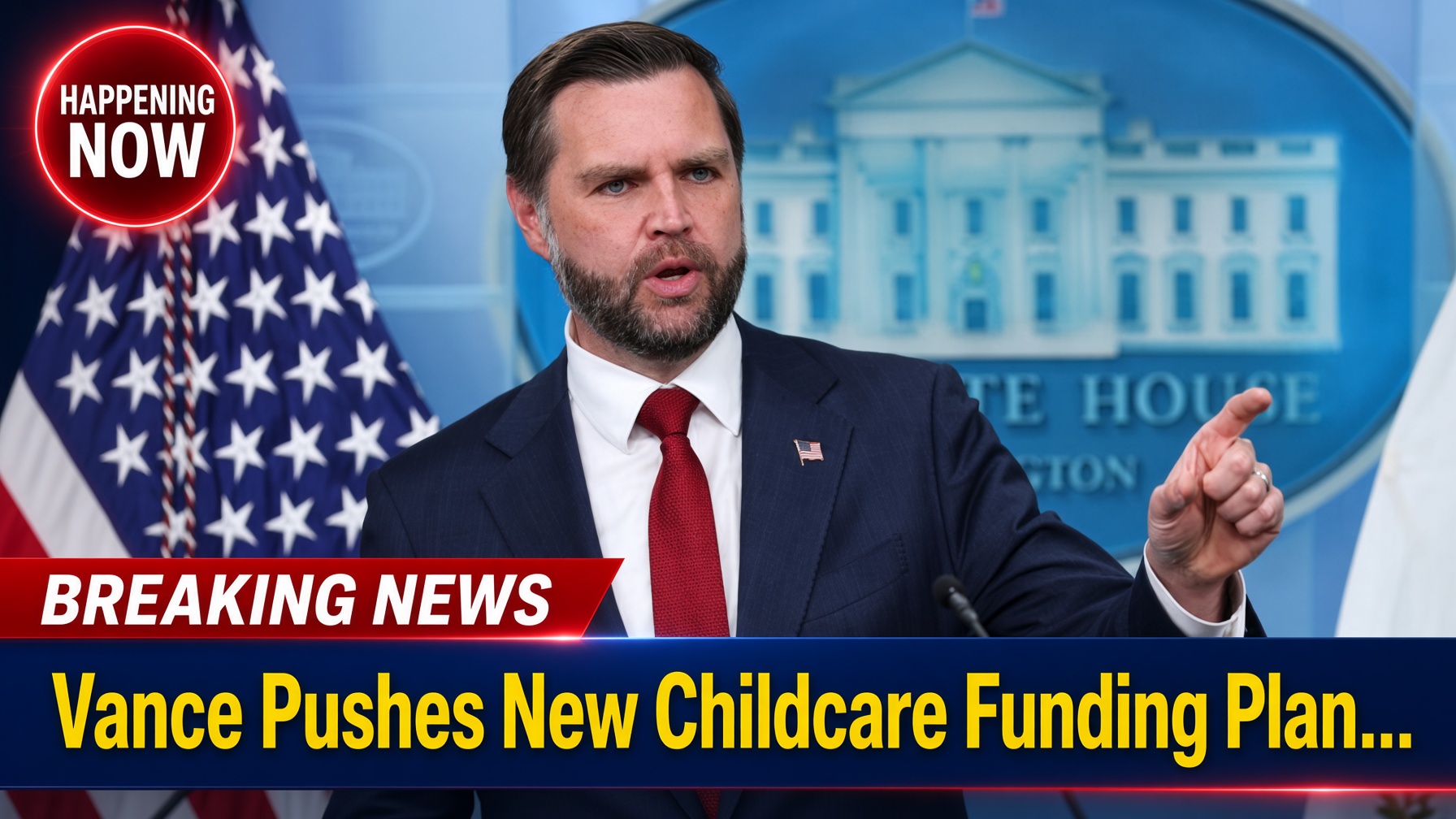
The Trump administration is drafting a significant change to a federal child-care program that could allow some married couples to receive government subsidies when one parent stays home to care for their children.
The proposal, which The New York Times reported is being advanced as a priority of Vice President JD Vance, would expand eligibility under the Child Care and Development Fund, or CCDF, a federal-state program primarily designed to help lower-income parents pay for child care while they work, attend school or participate in job training.
Under the draft rule, the administration would create a new category known as “parent-based child care.” A married couple meeting the program’s income requirements could qualify if one spouse works at least 35 hours per week while the other remains home to care for the couple’s child.
The stay-at-home parent would effectively become the child-care provider for purposes of the subsidy, with the federal assistance intended to offset some of the income the family gives up by having one parent remain outside the paid workforce.
The proposal would apply to married couples; unmarried couples with a stay-at-home parent would not qualify under the version currently being considered.
The proposal remains a draft and could be changed before it is formally released.
Administration officials would need to obtain White House approval and publish the regulation for public comment before it could take effect.
The Times reported that the administration believes the change can be accomplished administratively without new legislation from Congress.
The money would come from the Child Care and Development Fund, which was established in its modern form following welfare reforms enacted during the 1990s.
Federal rules generally require children receiving CCDF assistance to live with a parent or guardian who is working or participating in education or job training.
Federal law allows families with incomes up to 85% of their state’s median income to qualify, although states can impose lower income limits and establish additional eligibility rules.
The program serves roughly 1.3 million children in an average month, according to federal data, and provides subsidies that families generally use with licensed child-care centers, family child-care homes or other approved providers.
Federal data have also shown that the overwhelming majority of children receiving subsidies are placed in regulated care settings.
The Times reported that approximately 870,000 families currently receive assistance and that roughly 80% of participating households are headed by a single working parent, most commonly a mother.
The average benefit is approximately $9,000 per child annually.
That composition has become one of the central issues surrounding the administration’s proposal.
Supporters of assistance for stay-at-home parents have made a different argument: Federal child-care policy has historically subsidized families that purchase outside care while providing relatively little comparable assistance to families in which a parent gives up earnings to care for children at home.
That argument has appeared in conservative family-policy proposals for years.
Project 2025, the Heritage Foundation policy blueprint published before Trump’s return to office, specifically recommended directing more government child-care assistance toward home-based care.
The document proposed allowing funding to help parents offset the financial cost of staying home or to pay relatives who provide child care.
Vance has also argued for years that federal family policy should give parents more freedom to choose care provided by parents or relatives rather than structuring assistance primarily around commercial day-care arrangements.
The Times reported that the emerging regulation also incorporates ideas from legislation developed by Secretary of State Marco Rubio during his years in the Senate.
The proposal could therefore mark a broader change in the philosophy underlying federal child-care assistance: Rather than treating subsidies primarily as a mechanism allowing parents to enter or remain in the workforce, the government would begin recognizing full-time parental care itself as an eligible form of child care.
There are potential legal and administrative complications.
According to the Times, some HHS lawyers have questioned whether limiting the new benefit specifically to married couples could withstand legal scrutiny.
Officials have also raised concerns about fraud and oversight because subsidies traditionally flow to outside child-care providers rather than directly supporting a parent caring for his or her own child.
Those questions would likely receive additional scrutiny during the federal rulemaking process.