
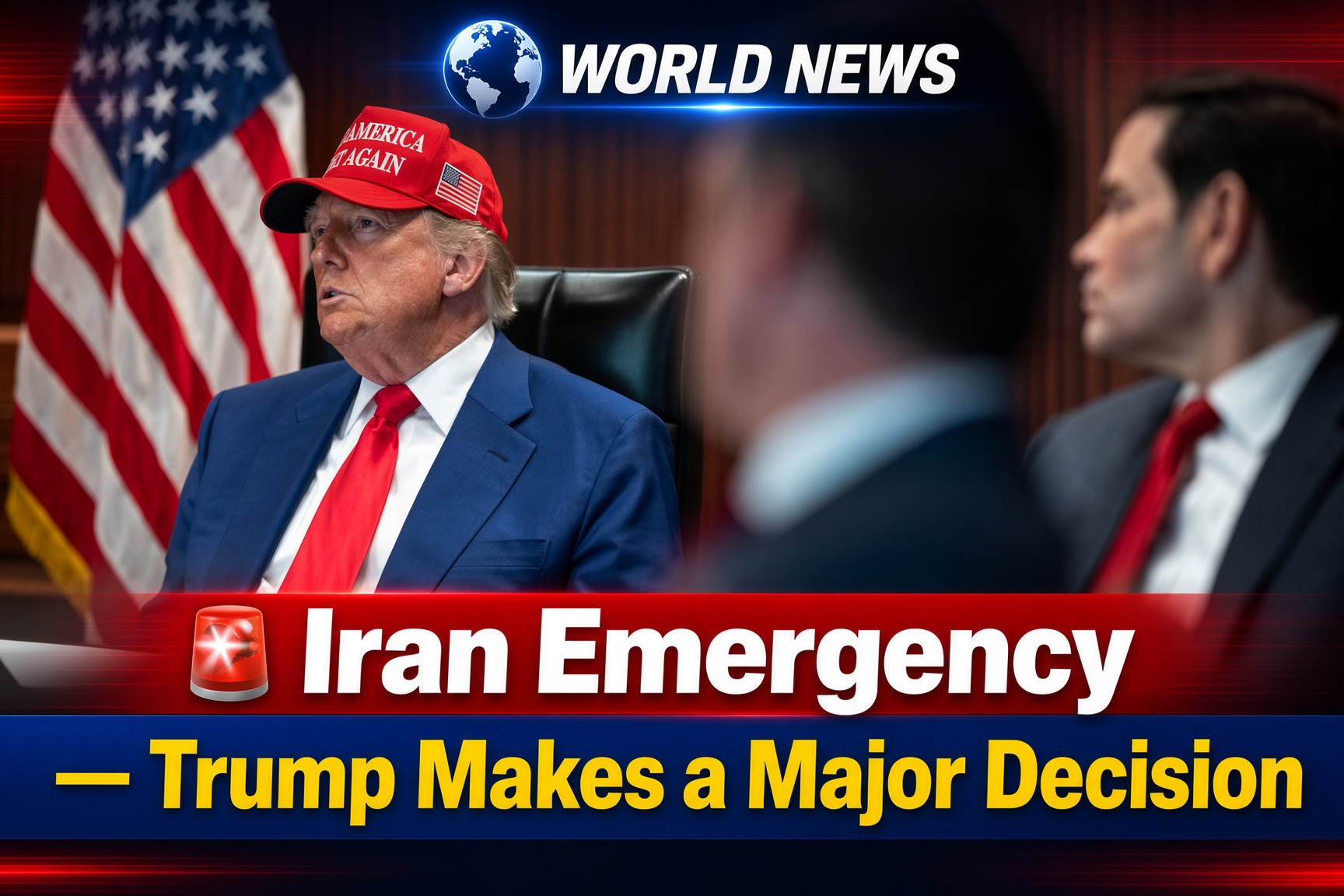
Iran’s ruling government still has not received the message that President Donald Trump is committed to increasing pressure on Tehran if it continues to reject a peace agreement that includes a commitment never to build a nuclear weapon.
U.S. Central Command announced Saturday that American forces struck three Iranian crude oil tankers after Iran’s Islamic Revolutionary Guard Corps (IRGC) launched ballistic missiles toward two U.S. Navy warships operating in regional waters.
“A U.S. aircraft carrier and guided-missile destroyer successfully evaded multiple unprovoked Iranian attacks. No American personnel were harmed,” CENTCOM said in a statement.
“Following Iran’s failed attacks, CENTCOM permanently disabled the IRGC crude oil carriers M/T Downy off the coast of Kharg Island and M/T Stark 1 near Jask,” the command said.
“American forces also completely destroyed the unladen crude oil carrier M/T Kylo, also known as the Noxen, in the Gulf of Oman, striking the vessel in multiple critical locations to render it inoperable after the crew was directed to abandon ship,” CENTCOM added.
CENTCOM said the three tankers were part of a multibillion-dollar network used to generate revenue for the IRGC and its regional proxies. The command said the strikes were intended to impose an economic cost on Tehran following the missile attacks.
“If you shoot at two of our ships, we will impose an even higher economic cost — taking out three of yours,” CENTCOM commander Adm. Brad Cooper said.
“We will not hesitate to defend American forces and, if necessary, destroy Iran’s limited and exposed oil fleet.”
The strikes mark another escalation in the renewed confrontation between the United States and Iran, which has included a series of attacks and counterattacks across the region in recent days. CENTCOM also released video showing explosions involving the vessels.
A U.S. official told Fox News after the strikes that targeting the tankers could place additional pressure on Iran by hitting assets tied directly to its oil-dependent economy. The official said the IRGC may not be able to easily replace the vessels, potentially making each loss increasingly costly for Tehran.
The strikes came as U.S. officials continued warning Americans across the Middle East to remain alert amid the renewed confrontation with Iran.
The U.S. Embassy in Bahrain was among several diplomatic missions in the region that issued security guidance this week urging Americans to “exercise heightened vigilance” because of the possibility of further escalation, flight cancellations, airspace closures, and other travel disruptions.
The State Department has also warned that Iran and groups aligned with Tehran could target U.S. interests overseas, including locations associated with Americans, as military exchanges between Washington and Tehran continue.
“Due to tensions in the Middle East, the security environment remains complex with the potential for unforeseen escalation,” the embassy said.
The embassy also warned that Iranian authorities and groups supportive of Iran may target U.S. interests overseas or locations associated with the United States and Americans, including U.S. businesses and other institutions.
Egyptian Foreign Minister Badr Abdelatty called on the United States and Iran to return to negotiations Saturday in an effort to de-escalate tensions in the Middle East.
The issue was discussed during a phone call between Abdelatty and his Omani counterpart, according to Egypt’s Foreign Ministry.
The latest strikes have added to growing tensions around the Strait of Hormuz, where shipping traffic has fallen sharply following the recent U.S.-Iran clashes. Iran has also announced plans for a new restricted zone in the Gulf.