

Trump Signs Sanctions Law Allowing Tariffs of Up to 100% on Major Buyers of Russian Energy
WASHINGTON, D.C.: President Donald Trump signed the Lindsey O. Graham Sanctioning Russia and Iran Act of 2026 into law on Friday, September 18, after the legislation passed the House of Representatives by a vote of 262-159 and the Senate by 86-11.
In addition to imposing sanctions targeting Russian officials, financial institutions and other entities, the law gives the president authority to impose tariffs of up to 100% on certain countries that purchase Russian oil or natural gas. It also authorizes tariffs of up to 500% on Russian-origin goods imported into the United States, subject to specified exemptions.
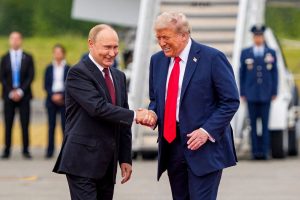
What the Law Authorizes
Under the measure, the president can impose tariffs on categories of countries rather than automatically targeting every individual nation. The law covers the five largest purchasers of Russian crude oil or natural gas, as well as certain countries that knowingly facilitate Russian energy purchases or sanctions evasion.
For covered countries, tariffs can reach up to 100%. The law also provides an exception for certain countries that purchase less than 15% of their natural gas imports from Russia and are taking significant steps to reduce that reliance.
The tariffs would generally take effect within 30 days after a country is designated. The president also has authority to waive the tariffs or impose them at a lower rate under the conditions provided by the law.
According to the Centre for Research on Energy and Clean Air, China has been the largest buyer of Russian fossil fuels for most of the past year, typically accounting for 40% to 50% of Russia’s energy export revenue, followed by India and Turkey.
Hungary and Slovakia continue to receive Russian crude through pipelines under EU exemptions, while France, Belgium, Spain and Bulgaria continue to import Russian liquefied natural gas (LNG) under existing contracts.
The ranking is based on trailing 12-month volumes, meaning the countries that qualify could change from month to month.
U.S. Imports From Potentially Affected Countries
U.S. goods imports from India totaled roughly $104 billion in 2025, with consumer goods accounting for about $57.9 billion.

India is also a major supplier of pharmaceuticals to the United States, with its exports including generic medicines, pharmaceutical ingredients and medical products. India has also become an important hub for smartphone assembly.
China remains one of the United States’ largest trading partners, supplying products including electronics, machinery, plastics and pharmaceutical inputs.
U.S. goods imports from Turkey totaled approximately $16.4 billion in 2025, while U.S. exports to Turkey reached about $20.4 billion. Major U.S. imports from Turkey included machinery, jewelry, electronics and textiles, while U.S. exports included aircraft parts and petroleum products.
How Russia Could Be Affected
The legislation imposes new sanctions on Russian political and military officials, as well as foreign networks accused of helping supply Russia’s war effort or evade existing sanctions.
The law also targets Russia’s so-called “shadow fleet” of tankers, which has been used to transport Russian crude and other petroleum products while helping circumvent existing sanctions and restrictions.
In addition, the law gives President Donald Trump authority to impose tariffs of up to 100% on goods from certain countries that continue significant purchases of Russian oil or natural gas, including major buyers such as China and India. The measure also provides for tariffs on countries that facilitate sanctions evasion.
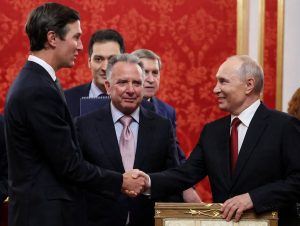
The legislation drew criticism from some Democrats, who argued that it gives the president broad authority to impose tariffs. The debate comes after the Supreme Court restricted the administration’s use of the 1977 International Emergency Economic Powers Act (IEEPA) as a basis for certain tariffs.
A Precedent From Earlier Tariffs
In 2025, the United States imposed an additional 25% tariff on Indian imports in connection with India’s purchases of Russian crude, on top of an existing 25% reciprocal tariff.
Those additional tariffs were removed in February 2026 after India agreed to stop purchasing Russian oil as part of a broader U.S.-India trade framework. The United States subsequently reduced the reciprocal tariff rate on Indian goods from 25% to 18%.
The earlier episode illustrates how tariff measures can be changed through subsequent negotiations and executive action.
Because the new law links tariffs on non-Russian goods to countries’ dealings with Russian energy, its implementation could affect trade relationships beyond the direct U.S.-Russia economic relationship.
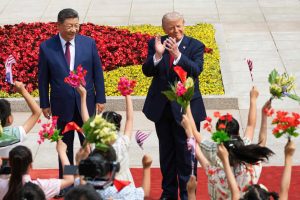
President Trump is scheduled to meet Chinese President Xi Jinping on September 24 during Xi’s upcoming U.S. state visit. Trade and tariff issues are expected to be among the subjects discussed.
The administration’s decision on whether and how broadly to use the new tariff authority during the statutory 30-day period will determine how the measure is applied to affected countries.
The legislation also received support from Ukrainian President Volodymyr Zelenskyy, who welcomed the House’s passage of the measure earlier in the week.

“It is symbolic that the US House of Representatives’ passage of Lindsey Graham’s sanctions bill took place on the night of yet another Russian attack on Ukraine involving ballistic missiles, other missiles, and drones,” Zelenskyy wrote on Telegram on Thursday.