
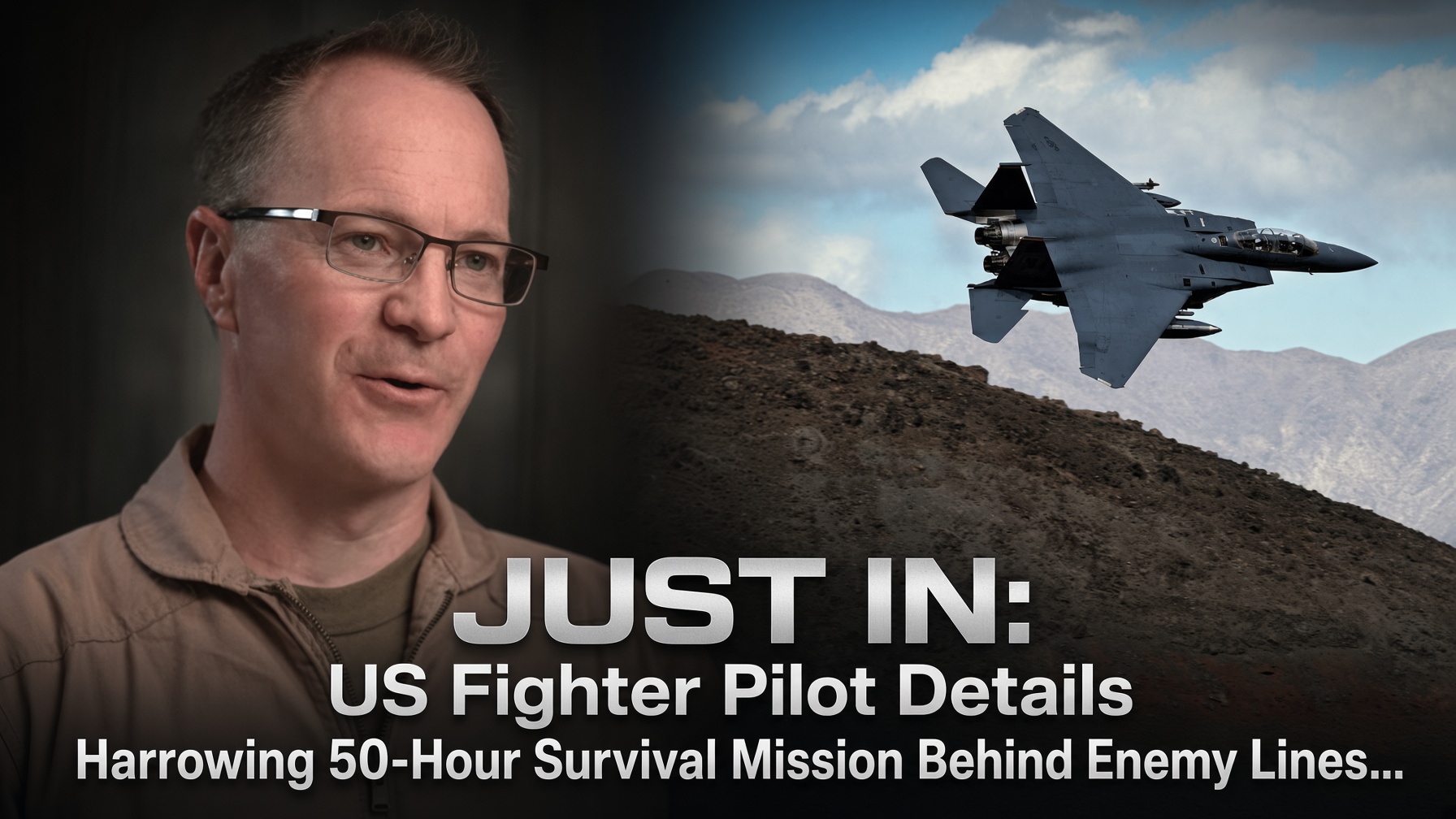
‘Bravo’ was aboard an F-15E Strike Eagle when a missile struck the jet during a mission targeting Iranian drone and missile sites
WASHINGTON — Suffering from a broken back, arm, and shoulder, a U.S. Air Force colonel managed to evade capture and survive behind enemy lines for 50 hours after his F-15E Strike Eagle was shot down during a mission targeting Iranian drone and missile sites.
The pilot, identified only by his callsign “Bravo” for security purposes, told 60 Minutes on Sunday that surviving the ordeal was nothing short of a “modern-day miracle.”
U.S. Air Force Colonel Survives Iran Jet Crash and Freefall
The colonel was serving as the weapons systems officer seated behind the pilot of an F-15E Strike Eagle—call sign “Dude 44″—when a shoulder-fired missile struck their two-seat fighter jet on April 2. He recalled feeling as though he had been “hit by a freight train.”
According to Adm. Brad Cooper, commander of U.S. Central Command, the crew had been deployed to strike Iranian industrial sites tied to Tehran’s drone and missile programs.
When it became clear the jet could not be saved, the pilot, call sign “Alpha,” and the colonel, call sign “Bravo,” both ejected. While Alpha deployed safely, Bravo experienced a terrifying freefall over the rugged Iranian terrain after realizing his parachute had been severely damaged in the strike.
“At one point, when I looked up and saw no parachute, that was the most terrifying thing I’ve ever seen,” Bravo said. “So I paused right then, and I prayed, ‘Lord, your will be done. But if I’m getting through this, I need help.'”
Military experts later estimated that Bravo slammed into the Iranian desert at speeds between 70 and 100 mph. Facing near-fatal odds, he survived with severe injuries, an outcome he describes as a “modern-day miracle.”
60 Minutes reported that the fall broke Bravo’s back, arm, and shoulder. Despite his severe injuries, he managed to hike and climb a 7,000-foot ridgeline to evade Iranian forces. He remained stranded behind enemy lines for two days without food or water before two elite Air Force pararescue operators extracted him.
Defense Secretary Pete Hegseth also appeared in the segment, recalling the moment he was woken up in the middle of the night with news of the crash.
Hegseth said his immediate focus shifted to the crew’s condition and whether Iranian forces were aware of their location. “Whether they’re alive or not, we’re going to go get them,” Hegseth said.
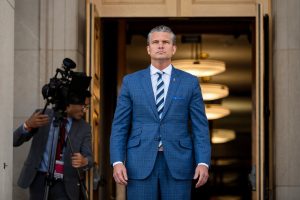
The interview follows reports that Hegseth personally pushed the airmen to participate in the broadcast. According to sources cited by CNN, both the crew members and military officials initially expressed reservations about the interview, fearing it could reveal classified details of the rescue operation.
While political appointees in Hegseth’s office initially insisted on the interview, Hegseth reportedly met with the two officers privately to ask for their voluntary participation rather than forcing their cooperation. Following that meeting, one officer agreed to sit for the interview while the other declined.