
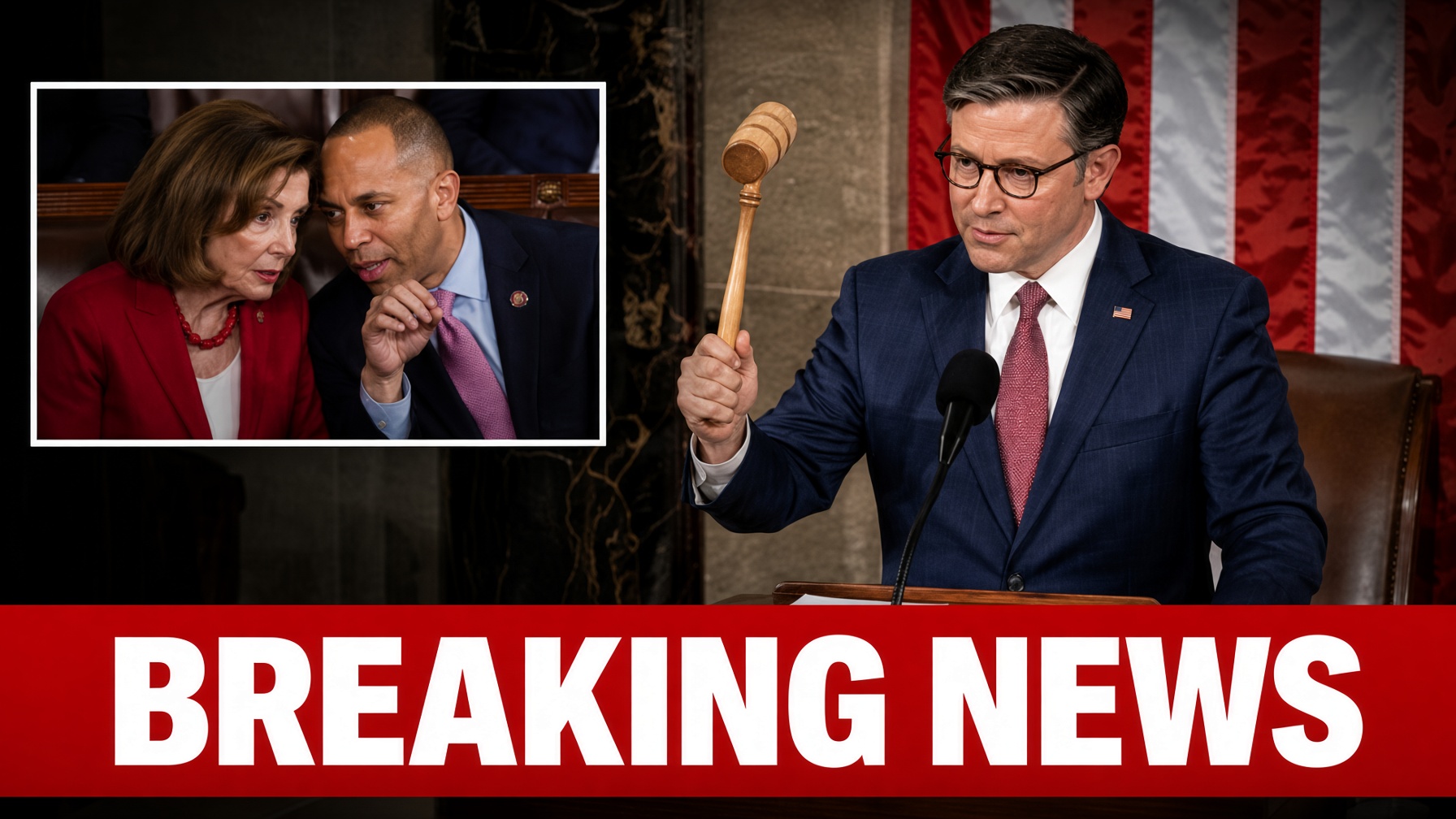
House Republicans Deliver Funding Victory, Sending Stopgap Bill to Trump
House Republicans delivered a funding victory Tuesday, sending President Donald Trump a stopgap measure designed to prevent a government shutdown.
The House approved H.R. 6500, the Continuing Appropriations and Extensions Act, 2027, by an overwhelming vote of 370-48.
Lawmakers acted under suspension of the rules, an expedited procedure that requires two-thirds support for passage.
The tally included 193 Republicans, 176 Democrats, and one independent voting in favor, while 48 opposed the measure.
The House agreed to the Senate amendments, completing congressional action and sending the legislation directly to Trump’s desk.
The Senate had already approved its amended version on August 8 by an extraor
House Republicans Deliver Funding Victory, Sending Stopgap Bill to Trump
House Republicans delivered a funding victory Tuesday, sending President Donald Trump a stopgap measure designed to prevent a government shutdown.
The House approved H.R. 6500, the Continuing Appropriations and Extensions Act, 2027, by an overwhelming vote of 370-48.
Lawmakers acted under suspension of the rules, an expedited procedure that requires two-thirds support for passage.
The tally included 193 Republicans, 176 Democrats, and one independent voting in favor, while 48 opposed the measure.
The House agreed to the Senate amendments, completing congressional action and sending the legislation directly to Trump’s desk.
The Senate had already approved its amended version on August 8 by an extraordinary bipartisan vote of 90-6.
The White House formally supports the measure, making presidential approval expected following the House vote.
H.R. 6500 prevents federal funding from expiring on September 30, when fiscal year 2026 officially ends.
Most federal agencies would continue operating at current spending levels through December 11, unless full-year appropriations are enacted sooner.
That approach gives Congress additional time while preserving essential government operations through the November 3 midterm elections.
Republicans portrayed the measure as responsible governing rather than allowing another shutdown battle to consume Washington.
House Appropriations Chairman Tom Cole said the legislation provides Americans with stability while lawmakers complete work on full-year spending bills.
“It gives the nation, and our constituents, certainty,” Cole said while urging lawmakers to support the compromise.
Cole emphasized that funding for servicemembers, transportation security, Social Security, disaster assistance, nutrition programs, and national-security functions would continue.
The legislation generally prevents agencies from beginning new projects that lack funding or authorization during fiscal year 2026.
It directs agencies toward limited funding actions, preserving congressional leverage over final fiscal year 2027 spending decisions.
Mandatory payments and Food and Nutrition Act programs would continue at rates necessary to maintain benefits under existing law.
Agencies may adjust civilian personnel funding to avoid furloughs after first reducing or deferring non-personnel administrative expenses.
National-security provisions allow funding flexibility for Navy shipbuilding cost increases affecting aircraft carriers, submarines, destroyers, and other vessels.
Those authorities include hundreds of millions of dollars for Virginia-class and Columbia-class submarine programs, as well as additional naval procurement requirements.
The measure permits up to $2.853 billion for Defense-wide National Security Systems during the temporary funding period.
Justice Department flexibility covers legal operations, federal judicial security, Marshals Service protection, and certain FBI preparations.
FEMA’s Disaster Relief Fund may operate at rates necessary for response and recovery under federal disaster law.
Wildfire accounts across the Department of the Interior and the Forest Service may likewise operate at rates necessary for suppression activities.
The National Flood Insurance Program receives a temporary extension through December 11, preventing another looming lapse in authority.
Essential Air Service operations also receive continued flexibility, protecting air connections serving smaller and rural American communities.
Veterans receive protections through extensions covering health care, mental health assistance, rural ambulance reimbursement, housing, and homelessness programs.
The bill extends the Staff Sergeant Parker Gordon Fox Suicide Prevention Grant Program through December 11.
It also continues assistance for very low-income veteran families in permanent housing during the temporary funding period.
Authorities supporting homeless veterans, disabled veterans, caregivers, adaptive sports, and VA transportation are likewise extended.
Surface transportation programs continue, extending federal highway and mass-transit authorities through December 11.
Highway Trust Fund programs receive proportional authorization for the extension period, preventing transportation funding disruptions.
The bill also extends the African Growth and Opportunity Act and related trade provisions through 2028.
That preserves qualifying African trade preferences, while the Haiti Economic Lift Program also receives an extension through 2028.
Customs user fees and merchandise-processing fee authority are extended through March 31, 2032.
Another provision temporarily delays the application of newly enacted hemp restrictions until December 11.
The legislation also blocks a proposed Office of Management and Budget federal-grant rule from being issued or finalized during the continuing resolution.
Republican Rep. Dan Newhouse said the agreement “avoids a shutdown while maintaining current spending levels.”
The Trump administration called the legislation a “clean, short-term continuing resolution” and warned against another damaging shutdown.
OMB said the package supports veterans’ health care, benefits, housing, nutrition, and other obligations important to American families.
Congress still must complete appropriations or negotiate another funding package before the December 11 deadline.
dinary bipartisan vote of 90-6.
The White House formally supports the measure, making presidential approval expected following the House vote.
H.R. 6500 prevents federal funding from expiring on September 30, when fiscal year 2026 officially ends.
Most federal agencies would continue operating at current spending levels through December 11, unless full-year appropriations are enacted sooner.
That approach gives Congress additional time while preserving essential government operations through the November 3 midterm elections.
Republicans portrayed the measure as responsible governing rather than allowing another shutdown battle to consume Washington.
House Appropriations Chairman Tom Cole said the legislation provides Americans with stability while lawmakers complete work on full-year spending bills.
“It gives the nation, and our constituents, certainty,” Cole said while urging lawmakers to support the compromise.
Cole emphasized that funding for servicemembers, transportation security, Social Security, disaster assistance, nutrition programs, and national-security functions would continue.
The legislation generally prevents agencies from beginning new projects that lack funding or authorization during fiscal year 2026.
It directs agencies toward limited funding actions, preserving congressional leverage over final fiscal year 2027 spending decisions.
Mandatory payments and Food and Nutrition Act programs would continue at rates necessary to maintain benefits under existing law.
Agencies may adjust civilian personnel funding to avoid furloughs after first reducing or deferring non-personnel administrative expenses.
National-security provisions allow funding flexibility for Navy shipbuilding cost increases affecting aircraft carriers, submarines, destroyers, and other vessels.
Those authorities include hundreds of millions of dollars for Virginia-class and Columbia-class submarine programs, as well as additional naval procurement requirements.
The measure permits up to $2.853 billion for Defense-wide National Security Systems during the temporary funding period.
Justice Department flexibility covers legal operations, federal judicial security, Marshals Service protection, and certain FBI preparations.
FEMA’s Disaster Relief Fund may operate at rates necessary for response and recovery under federal disaster law.
Wildfire accounts across the Department of the Interior and the Forest Service may likewise operate at rates necessary for suppression activities.
The National Flood Insurance Program receives a temporary extension through December 11, preventing another looming lapse in authority.
Essential Air Service operations also receive continued flexibility, protecting air connections serving smaller and rural American communities.
Veterans receive protections through extensions covering health care, mental health assistance, rural ambulance reimbursement, housing, and homelessness programs.
The bill extends the Staff Sergeant Parker Gordon Fox Suicide Prevention Grant Program through December 11.
It also continues assistance for very low-income veteran families in permanent housing during the temporary funding period.
Authorities supporting homeless veterans, disabled veterans, caregivers, adaptive sports, and VA transportation are likewise extended.
Surface transportation programs continue, extending federal highway and mass-transit authorities through December 11.
Highway Trust Fund programs receive proportional authorization for the extension period, preventing transportation funding disruptions.
The bill also extends the African Growth and Opportunity Act and related trade provisions through 2028.
That preserves qualifying African trade preferences, while the Haiti Economic Lift Program also receives an extension through 2028.
Customs user fees and merchandise-processing fee authority are extended through March 31, 2032.
Another provision temporarily delays the application of newly enacted hemp restrictions until December 11.
The legislation also blocks a proposed Office of Management and Budget federal-grant rule from being issued or finalized during the continuing resolution.
Republican Rep. Dan Newhouse said the agreement “avoids a shutdown while maintaining current spending levels.”
The Trump administration called the legislation a “clean, short-term continuing resolution” and warned against another damaging shutdown.
OMB said the package supports veterans’ health care, benefits, housing, nutrition, and other obligations important to American families.
Congress still must complete appropriations or negotiate another funding package before the December 11 deadline.