
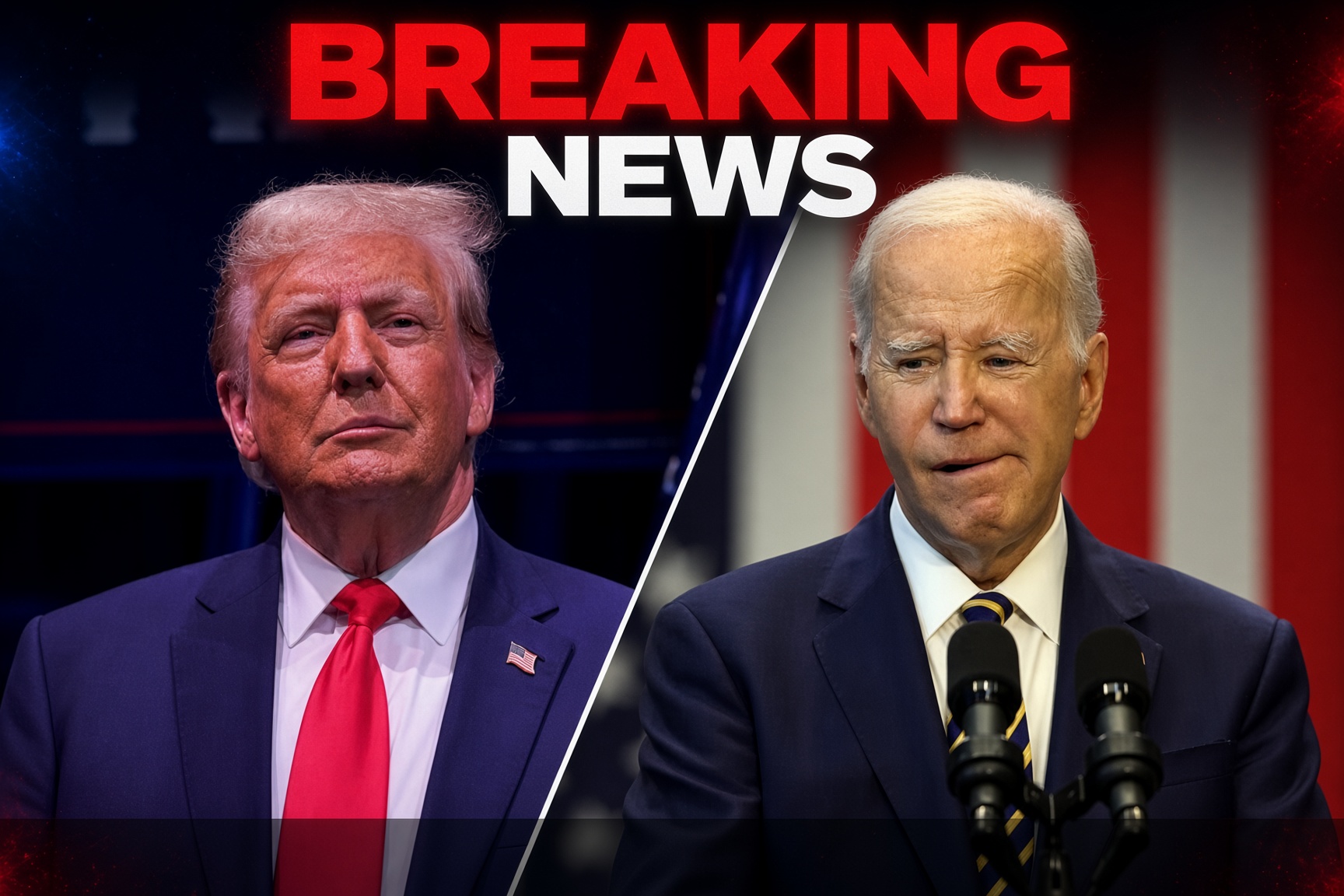
It turns out that then-President Joe Biden knew full well that he had weaponized his Justice Department against his 2020 opponent, Donald Trump.
That’s according to the current White House, as reported Monday.
Biden privately considered the possibility of pardoning Donald Trump while Trump was facing multiple criminal prosecutions, according to an account from Utah Gov. Spencer Cox.
Cox, a Republican, told The Atlantic that he discussed the idea with Biden during a phone call in August 2023, arguing that a pardon could help break what he viewed as a growing cycle of political retaliation.
According to Cox’s account, Biden told him he had “actually considered this for a while” and said he and then-first lady Jill Biden had discussed the possibility at length that same week.
Biden ultimately did not pardon Trump.
Before leaving office, Biden issued a broad range of pardons and commutations, including clemency for family members and several former government officials, but Trump was not among those who received presidential clemency.
The Trump White House has seized on the disclosure, arguing that Biden’s consideration of a pardon supports its longstanding claims that the prosecutions against Trump were politically motivated.
Cox said he acknowledged to Biden that his proposal for a Trump pardon “might sound crazy,” but argued that such a move could help lower the political temperature in the country.
The Utah governor said he hoped Biden would “choose mercy over escalation” and “unity over retaliation.”
Cox later endorsed Trump following the assassination attempt against him at a campaign rally in Butler, Pennsylvania, in July 2024. At the time, Cox also urged Trump to use the moment to help unite the country.
Ultimately, Cox said neither Biden nor Trump pursued the approach to national unity that he had advocated.
“In both cases, things didn’t turn out quite the way I’d hoped,” he told The Atlantic.
Cox’s account, published in The Atlantic, shows that Biden privately gave serious consideration to the politically extraordinary possibility of pardoning Trump while his future election opponent was facing multiple criminal prosecutions.
According to Cox, Biden discussed the idea with first lady Jill Biden and told the Republican governor that he would “seriously consider” the proposal.
Biden ultimately decided to leave office without issuing a pardon to Trump.
The disclosure has fueled criticism from Trump allies, who argue that Biden’s willingness to consider clemency raises additional questions about how he viewed the prosecutions.
Biden later used his pardon authority to grant sweeping clemency to his son, Hunter Biden, after repeatedly saying publicly that he would not do so.
Hunter Biden had been convicted on federal firearms charges related to statements about his drug use when purchasing a gun in 2018 and had separately pleaded guilty to federal tax charges.
Hunter has since criticized aspects of his father’s decision to pardon him, saying the move was “not good” for the Constitution. Joe Biden’s pardon of his son dated back to 2014, another aspect of the clemency that drew attention.
Biden also issued a series of preemptive pardons during his final hours in office, including clemency for Dr. Anthony Fauci, Joint Chiefs of Staff Chairman Army Gen. Mark Milley, and members and staff of the House committee that investigated the Jan. 6 Capitol attack.
In his written pardon announcement, Biden justified the actions by saying the recipients “have been threatened with criminal prosecutions” and called them public servants who “served our nation with honor and distinction.”
He added that “public servants have been subjected to ongoing threats and intimidation for faithfully discharging their duties.”
White House spokeswoman Lauren Bis responded to Cox’s account with a statement to the Daily Mail that directly addressed the implications of Biden’s deliberation.
“This shows President Biden knew he and his fellow extreme Democrats had weaponized the justice system against his political opponent, but did nothing to stop it,” she said, adding sarcastically: “A real profile in courage.”