Republicans have suffered a major Senate setback, with a longtime incumbent conceding after an opponent’s campaign overcame controversy and upheaval.
The result removes an influential committee chair and hands Democrats a pickup in a state crucial to Senate control.
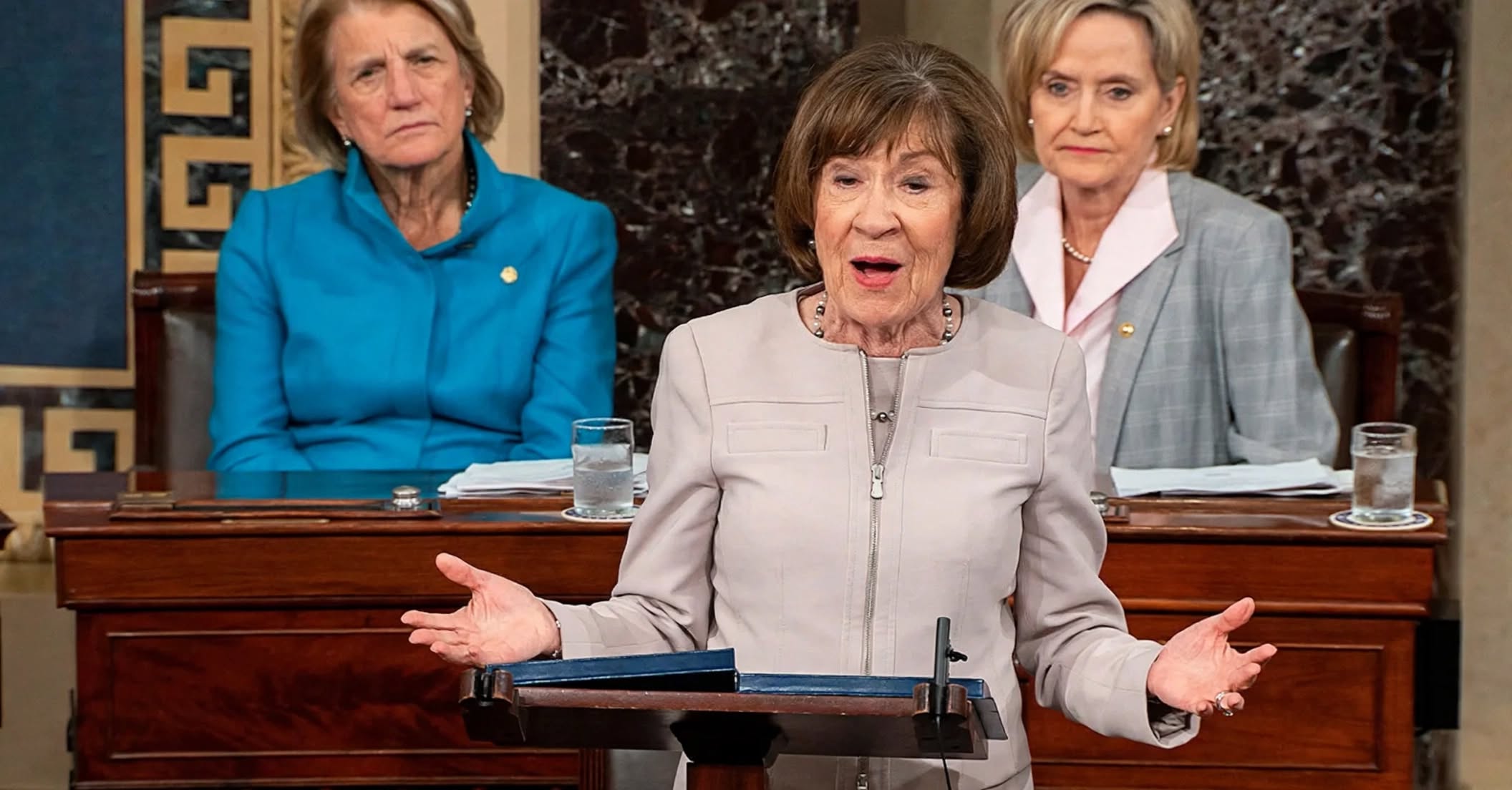
Democrat Troy Jackson has defeated Republican Sen. Susan Collins in Maine.
Collins conceded the race, bringing an end to a Senate career that began with her first election in 1996.
She was seeking a sixth term and served as Maine’s longest-tenured member of Congress, with nearly three decades in Washington.
“It has been the honor of my life to serve the people of Maine in the United States Senate.”
Collins also said she had called Jackson to congratulate him and promised her staff would help ensure a smooth transition.
Her departure costs Republicans the chair of the Senate Appropriations Committee, one of the chamber’s influential positions overseeing federal spending.
Collins had argued that her seniority and committee leadership gave Maine an advantage in securing resources and advancing priorities.
Jackson, a fifth-generation logger and former Maine Senate president, campaigned as a working-class Democrat with close ties to organized labor.
“Maine, I owe you everything,” Jackson wrote on X after the projected victory.
He promised to remember his roots and those he intended to represent as he prepared to move into the Senate.
The Democrat previously represented parts of Aroostook County in the Legislature, building an identity connected to rural communities and workers.
His path to November was turbulent, beginning with his replacement of Democratic nominee Graham Platner on the ballot.
Platner withdrew in July amid sexual-assault allegations, prompting a Maine Democratic Party vote that installed Jackson as the replacement nominee.
That substitution gave Democrats a former legislative leader after the collapse of their original nominee’s campaign threatened their Senate opportunity.
Jackson then faced personal controversy when reports said his partner, the mother of his children, was also his second cousin.
According to those reports, the couple share great-grandparents, a revelation that became an obstacle during the Democrat’s compressed campaign.
Despite that controversy, Jackson defeated a Republican who had repeatedly survived in a state increasingly favorable to Democratic presidential candidates.
Collins won reelection by nearly nine percentage points in 2020, illustrating the durable political coalition Democrats broke this time.
Her campaign emphasized independence, bipartisan negotiation, and legislative accomplishments involving infrastructure, veterans, rural communities, and federal assistance for Maine residents.
She presented her experience as a practical asset, arguing that effective representation required the ability to negotiate across party lines.
Democrats instead targeted her relationship with President Donald Trump, saying her moderate reputation conflicted with support for his policies.
They also highlighted her vote to confirm Supreme Court Justice Brett Kavanaugh, making a decision part of their campaign argument.
Collins responded by pointing to occasions when she opposed Trump and fellow Republicans, defending her willingness to act independently.
She disputed attacks portraying her as controlled by the president, suggesting Trump himself would reject that description of their relationship.
Her argument reflected a challenge for moderate Republicans: maintaining support from their party while appealing to voters outside its base.
Former Democratic Sen. Joe Manchin joined Collins on the campaign trail during closing weeks, reinforcing her pitch for bipartisan leadership.
His participation offered support from across the aisle, but it ultimately did not preserve Collins’ seat against the Democratic challenger.
Jackson argued that he would challenge Washington’s establishment and wealthy interests, placing economics and labor advocacy at the campaign’s center.
His victory gives Democrats a senator with experience leading a state legislative chamber and connections to rural Maine.
It also removes one of the GOP’s most resilient statewide candidates, reshaping a delegation associated with Collins’ individual political brand, Fox News reported.
The Senate implications extend beyond Maine because Democrats converted a Republican-held seat rather than simply defending one of their incumbents.
This article may contain commentary which reflects the author’s opinion.