
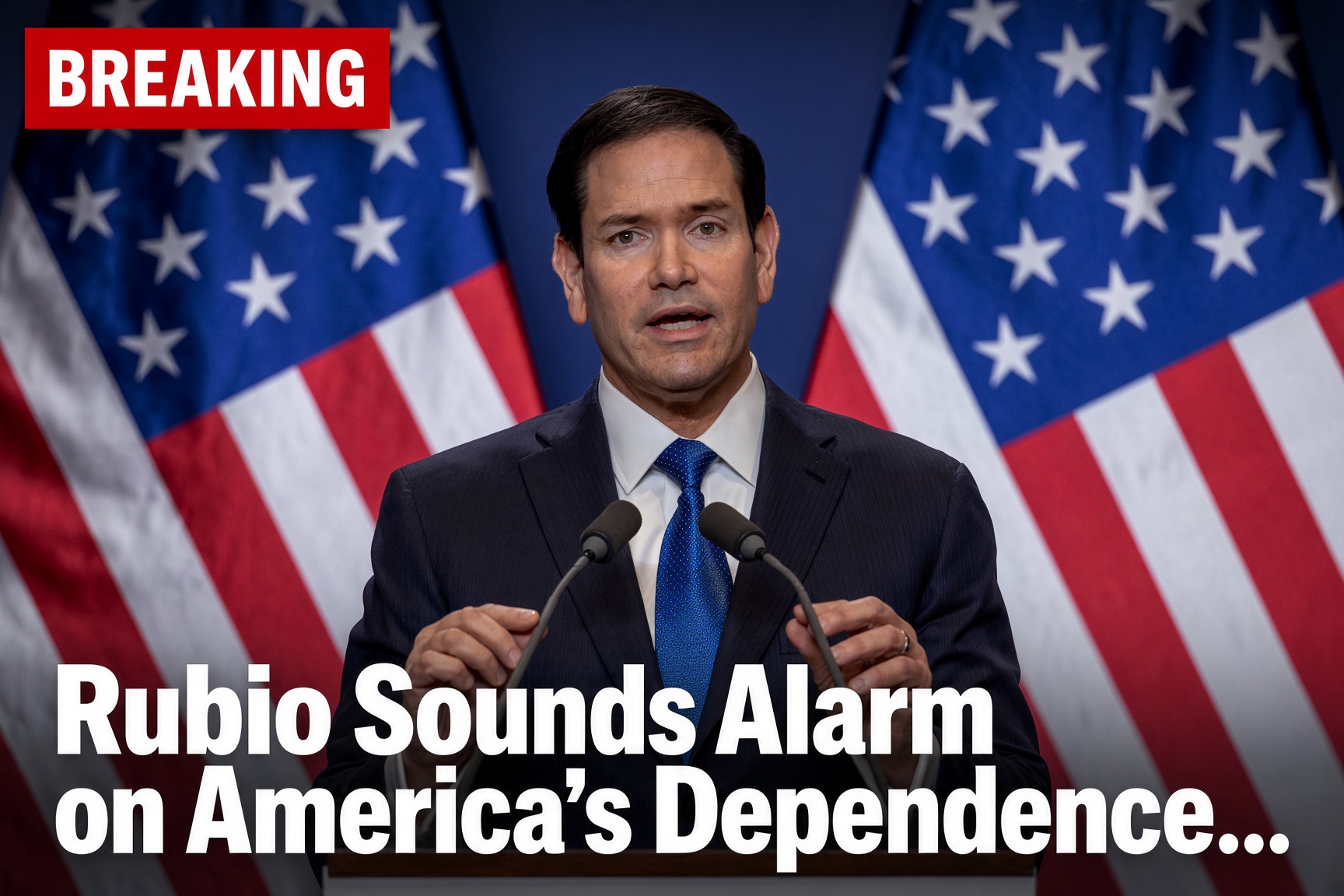
Secretary of State Marco Rubio made the remarks at the launch of the Foundry School, a State Department program focused on preparing workers for advanced manufacturing jobs.
WASHINGTON, D.C. — Secretary of State Marco Rubio said the U.S. push to produce goods wherever they could be made at the lowest cost helped deindustrialize America and created dangerous dependence on other nations.
Rubio said that dependence now affects supplies needed for economic activity, national security, and the country’s ability to remain a prosperous nation-state.
He made the remarks Thursday, September 3, at the launch of the Foundry School at the Institute of Peace in Washington.
Marco Rubio Says Cheap Production Hollowed Out U.S. Industry
“I think we made a terrible mistake in this country,” Rubio said, referring to the post-Cold War belief that goods should be produced wherever they could be made most efficiently and cheaply.
That approach, he said, prioritized higher corporate profits and lower consumer costs while assuming that economic integration would reshape the world around free enterprise and democracy.
Rubio argued that assumption “ran into reality” because nations continue to act in their own interests, with national borders and nationalism still playing an important role.
“The result of it is that it deindustrialized America,” Rubio said.
He said the country lost the capacity to produce not only large industrial equipment but also basic components needed for modern economic life.
As a result, Rubio said, the United States became “dangerously dependent” on other nations for goods tied not only to economic strength but also to national security and prosperity.
The administration is seeking to reverse that dependence through a broader reindustrialization effort, Rubio said, including securing access to critical minerals and developing the ability to process them domestically.
Marco Rubio Calls for a Long-Term Effort
Rubio said the initiative depends on cooperation among the government, higher education, and the private sector, with businesses identifying needed skills and schools helping workers acquire them.
“These three pillars working together drive us towards this outcome that we want,” Rubio said.
He also rejected the idea that rebuilding American manufacturing would be a short-term undertaking.
“This is not a two-year project,” he said, adding that the effort would require sustained attention across multiple administrations.
Rubio said the push “has to go on for a generation,” making long-term government commitment a key part of the initiative he presented at the Washington launch.
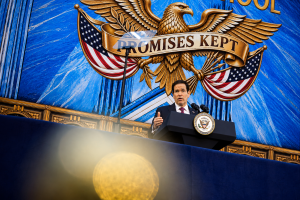
The Foundry School Targets Advanced Manufacturing Skills
Rubio said rebuilding domestic production will require a highly skilled workforce, including workers who may need to retrain multiple times throughout their careers.
The Foundry School, a State Department project under the Pax Silica initiative, is designed to train entrepreneurs, engineers, technicians, and industrial leaders for advanced manufacturing jobs in semiconductors, defense, and energy.
Rubio also emphasized the role of higher education, which he called “one of the crown jewels” powering American innovation and economic influence.
He said the United States had created innovations that were later manufactured elsewhere and argued that colleges can be repurposed to provide workers with the skills needed for modern manufacturing.
The initiative is also intended to address questions about the value of a college education, Rubio said.
Students who complete the curriculum, he argued, should leave with skills that can make them immediately employable in well-paying, stable jobs.