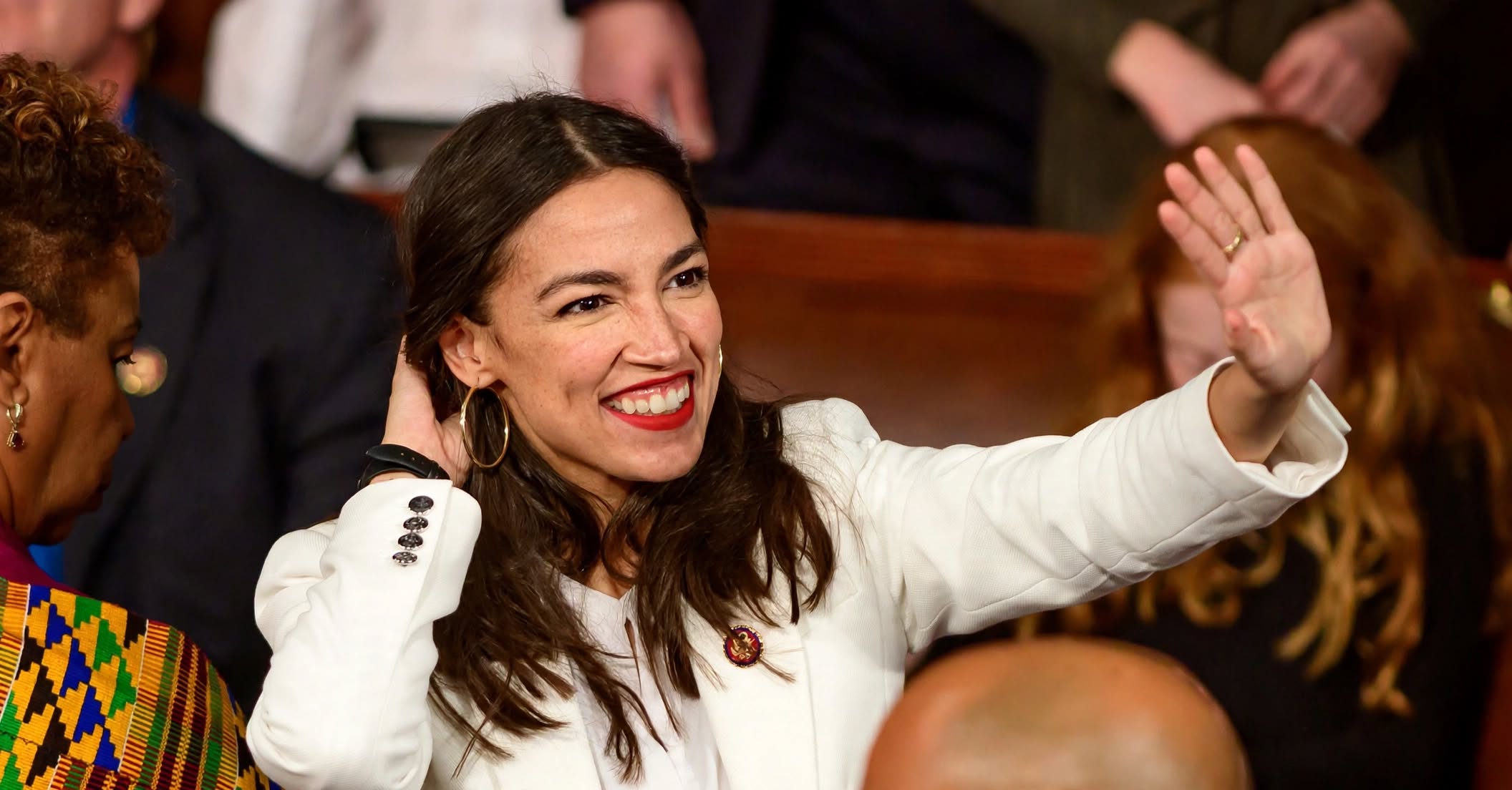
Rep. Alexandria Ocasio-Cortez’s campaign is circulating a strategy memo touting her growing national influence as speculation about her political future intensifies.
The five-page document was distributed to allies as Democrats began debating the party’s direction following their sweeping victories in the 2026 midterms.
While the memo does not announce a 2028 campaign, it explicitly anticipates questions about whether Ocasio–Cortez could seek the presidency or Senate.
The document instead presents the New York Democrat as an increasingly influential national figure capable of reaching working-class voters beyond progressive Democratic strongholds.
“Over the past two years, Rep. Ocasio–Cortez has built a record of success that extends beyond her own electoral victories,” the memo states.
Her campaign argues that candidates in rural communities and competitive congressional districts increasingly view an Ocasio–Cortez endorsement as beneficial rather than politically damaging.
That argument represents a notable effort to broaden the political image Ocasio–Cortez has carried since arriving in Congress following her stunning 2018 primary victory.
Ocasio–Cortez has long been associated with the Democratic Party’s progressive wing and remains a member of the Democratic Socialists of America.
Her campaign now argues that economic populism has allowed her to connect with voters who do not necessarily identify with the Democratic Party’s left flank.
Much of what Ocasio–Cortez claims in the way of domestic policy is drawn from socialism, an economic model that has largely failed in every country where it has been fully implemented.
Nevertheless, the memo says that strategy was partly influenced by conversations with voters who supported both Donald Trump and Ocasio–Cortez in the 2024 election.
Those voters expressed frustration with a political system they believed favored corporations and wealthy interests over working Americans, according to the document.
Ocasio–Cortez subsequently argued Democrats should emphasize economic populism and opposition to concentrated corporate wealth when attempting to rebuild their working-class coalition.
The memo highlights her fundraising operation as another indication of her growing national reach.
Her campaign reported collecting more than $38 million through more than two million contributions, with the average donation totaling $17.56.
Ocasio–Cortez also directed more than $3 million toward Democratic candidates and state parties during the election cycle.
Her campaign argues that the small-dollar operation rivals that of Vermont Sen. Bernie Sanders, Ocasio–Cortez’s longtime progressive ally.
The congresswoman also spent considerable time outside New York campaigning for Democratic candidates during the midterms.
Her endorsements included Michigan Senate candidate Abdul El–Sayed and House candidates Sam Forstag in Montana and Randy Villegas in California.
The memo specifically highlights Forstag’s Democratic primary victory after he appeared alongside Ocasio–Cortez and Sanders during their “Fighting Oligarchy” tour.
It similarly points toward Ocasio–Cortez’s work for El-Sayed, who ultimately won Michigan’s open Senate seat in Tuesday’s election.
Her campaign also says she became a prominent Democratic surrogate alongside former President Barack Obama, Kamala Harris, and Pete Buttigieg during the midterm campaign.
The memo traces Ocasio–Cortez’s national strategy partly to setbacks she experienced inside Washington.
Those included her unsuccessful effort to become ranking Democrat on the House Oversight Committee and Democratic divisions during a March 2025 government funding fight.
Ocasio–Cortez subsequently joined Sanders for large rallies across Democratic, Republican, and politically competitive areas of the country.
The campaign presents those appearances as evidence that her economic message can attract audiences outside traditional progressive strongholds.
Her own fundraising and electoral strength provide additional ammunition for allies considering what she could do next.
Ocasio–Cortez raised more than $38 million during the cycle and directed significant resources toward Democrats competing outside her New York district.
She also easily won her 2026 Democratic primary after receiving nearly 87% of the vote against two challengers.
Ocasio–Cortez has not announced whether she intends to remain in the House, seek a Senate seat, or pursue the presidency in 2028.
She previously said she would consider her political future after the general election.
The memo nevertheless makes clear that her advisers expect questions about 2028 to intensify immediately.
“In the coming days and weeks, much will be discussed about the future of the Democratic Party and 2028,” the document states.
Allies are instructed to emphasize Ocasio–Cortez’s record rather than endorse a particular future campaign.
The memo says she will continue looking for opportunities “to do the most good for the most people.”
This article may contain commentary which reflects the author’s opinion.