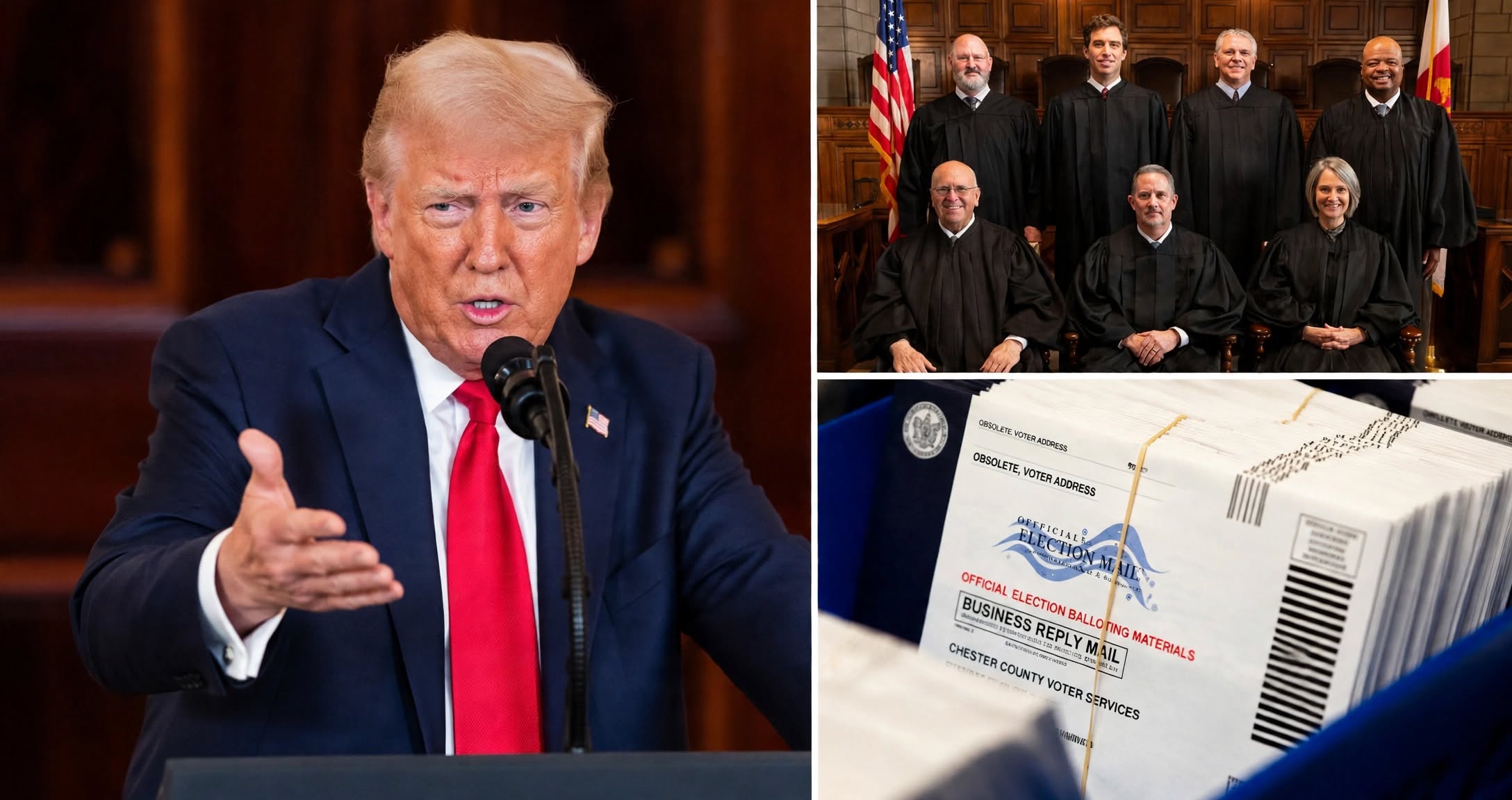
An emergency election fight reached the nation’s highest court Monday, producing a decision with voting already underway across the country.
The administration sought to preserve disputed ballots separately while officials examined citizenship concerns, but the justices declined to intervene.
The Supreme Court rejected President Donald Trump’s emergency request to require California to set aside potentially thousands of mail ballots.
The Justice Department said the ballots could involve registered voters who may be noncitizens, citing a list exceeding 20,000 names.
The justices issued a one-sentence order hours after the application arrived, without explanation or noted dissents.
Their decision leaves California’s ballot-processing procedures in place as the state conducts Tuesday’s midterm election and continues counting returned ballots.
Solicitor General John Sauer asked for what he described as a modest remedy: temporarily separating the ballots pending further review.
The administration argued that authorities have an interest in ensuring only citizens vote and in enforcing restrictions on noncitizen voting.
DOJ also maintained that California’s failure to investigate the flagged registrations was frustrating enforcement of federal criminal law.
Its request focused on keeping questioned ballots identifiable before processing made separation impossible, a concern raised by a dissenting judge.
California officials and voting rights groups disputed the underlying evidence, saying the approach could wrongly target American citizens.
They also argued that federal officials lacked authority to dictate how California should handle the ballots, a position accepted previously.
Monday’s Supreme Court order followed a Ninth Circuit ruling Friday that rejected the administration’s attempt to intervene in mail-ballot counting.
Judges Mark Bennett, appointed by Trump, and Gabriel Sanchez, appointed by Joe Biden, issued the majority decision against the government.
The majority said disputes about different vote-by-mail procedures should be taken to Congress rather than resolved through the requested intervention.
It cited uncertainty about the risk of noncitizen voting and pointed to California’s procedures for determining whether voters are eligible.
The panel also identified a risk that the requested relief could disenfranchise voters, siding with California on the immediate dispute.
Judge Patrick Bumatay, another Trump appointee, dissented, stressing that the administration wanted questioned ballots kept separate rather than automatically discarded.
He argued that federal courts have protected citizens’ voting rights by blocking unlawful state action when federal interests are implicated.
Bumatay emphasized that once the ballots were processed together, the ability to separate them would disappear, all parties agreed.
His dissent framed the issue as preserving a remedy while allegations were examined, particularly where federal election integrity was involved.
The Supreme Court’s refusal means that approach will not govern California’s processing under the emergency request presented Monday.
The justices did not request a response brief from California or other parties before ruling, according to the report.
Governor Gavin Newsom celebrated the decision, calling the lawsuit a baseless attack on California’s electoral process after lower-court losses.
Lawyers for groups opposing the administration likewise welcomed the outcome, saying the litigation had cast suspicion on eligible voters’ ballots.
The ruling also came against the backdrop of the Purcell principle, which cautions against federal courts changing election rules.
The appeals court raised that concern, although the Supreme Court’s unexplained order did not identify which considerations determined its decision.
The timing was especially tight because the application arrived on the eve of Election Day, after early voting nationwide.
An unknown number of California mail ballots implicated by government claims may already have been counted, according to the account.
The administration’s Supreme Court election record has included both defeats and victories involving mail ballots and citizenship information.
In September, the justices rejected Trump’s proposal to give the Postal Service expanded authority to withhold certain mail ballots.
Election officials had warned that the proposed changes would severely disrupt this year’s midterms, according to the supplied report, CNN reported.
Days later, however, the court sided with Homeland Security, allowing the department to provide citizenship data to state election officials.
This article may contain commentary which reflects the author’s opinion.