The House’s socialist and progressive faction could expand substantially after Tuesday’s midterms following a string of Democratic primary victories by DSA-backed candidates.
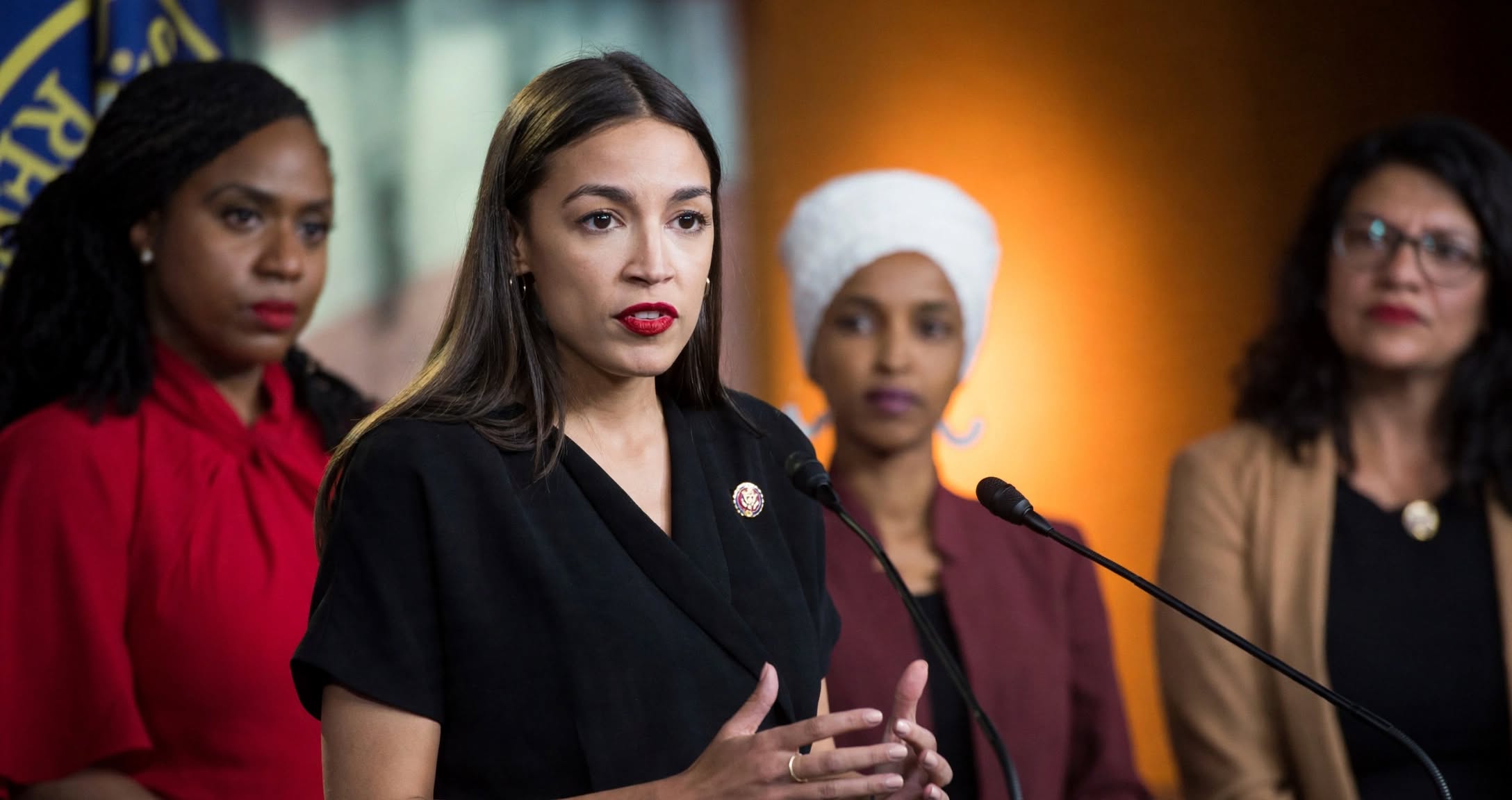
The group popularly known as the “Squad” emerged after Alexandria Ocasio–Cortez’s 2018 election and subsequently became an influential Democratic faction.
Now, a new collection of candidates is preparing to enter Congress with ambitions to wield considerably more leverage over Democratic leadership, the New York Post reported.
The Post estimates the current seven-member core could grow to as many as 16 lawmakers following Tuesday’s elections.
That number could approach two dozen when including other progressive lawmakers who share policy goals without maintaining close organizational ties to Democratic Socialists of America.
The DSA itself says seven of its endorsees are positioned to serve in the next Congress, including Ocasio–Cortez and Michigan Rep. Rashida Tlaib.
Five newcomers in heavily Democratic districts are Chris Rabb, Melat Kiros, Donavan McKinney, Darializa Avila Chevalier and Claire Valdez.
DSA says none of those seven candidates face competitive general-election contests Tuesday, making their expected arrival in Washington particularly significant.
Additional DSA-backed candidates are competing in deep-blue areas and states like California, potentially increasing the socialist organization’s congressional representation further.
The organization endorsed 10 House candidates during the 2026 cycle and hundreds of candidates and ballot initiatives nationwide.
DSA describes itself as the country’s largest socialist organization and says working people should democratically control the economy and society.
Several incoming candidates have already discussed coordinating their activities rather than operating individually once they arrive in Washington.
That emerging collection has sometimes been labeled “the Bloc,” distinguishing the incoming lawmakers from the original Squad.
Their influence could be especially important if Democrats capture the House with only a narrow majority, giving a small faction substantial procedural leverage.
The emerging socialist faction will still face significant resistance from Republicans and more moderate Democrats on many of its largest policy proposals.
But its members could potentially withhold support for House rules, demand amendment votes or seek concessions involving committee assignments and leadership decisions.
One of their earliest opportunities could arrive during the election of the next House speaker if Democrats gain control of the chamber.
Progressive lawmakers could demand commitments from Democratic leadership before providing the votes necessary to organize the House.
Policy priorities promoted across the broader DSA movement include Medicare for All, stronger rent controls and increased taxes on wealthy Americans.
Some DSA-backed candidates have also advocated abolishing ICE, demilitarizing the southern border and expanding government assistance for immigrants seeking citizenship.
Valdez has called for nationwide rent control while supporting a transgender bill of rights and gender-affirming care within Medicare for All.
Rabb has backed government-run grocery stores, an idea also associated with New York City Mayor Zohran Mamdani’s democratic-socialist agenda.
Other priorities among candidates and allied organizations include eliminating cash bail, ending life-without-parole sentences and cutting American military assistance to Israel.
DSA’s broader platform also calls for eventually abolishing existing police and prison systems, a position likely to generate significant congressional opposition.
Not every progressive candidate supports every DSA position, however, making the potential coalition considerably less uniform than a traditional congressional caucus.
The incoming candidates have nevertheless openly discussed working together to increase their influence over legislation, committees and internal Democratic Party rules.
Republicans are already preparing to make the expanded socialist presence a central argument against Democratic control of Congress.
RNC spokeswoman Delanie Bomar told the Post that Republicans believe an enlarged Squad would pressure Democratic leaders into pursuing unpopular ideological priorities.
Concerns also exist within Democratic circles about whether an empowered left flank could complicate leadership’s attempts to focus on economic issues.
A former Democratic leadership aide told the Post the newcomers would likely seek influential committee assignments while attempting to dominate the party’s political narrative.
The socialist movement’s electoral footprint has expanded significantly beyond the handful of lawmakers who initially made the Squad nationally recognizable.
DSA’s own election reporting identified Ocasio–Cortez, Tlaib, and five incoming candidates as its likely seven-member congressional delegation following November.
Meanwhile, DSA-backed politicians are increasingly competing for state legislative and municipal offices as the organization builds a broader political bench.
This article may contain commentary which reflects the author’s opinion.