THE STATE OF PLAY
The Hook: In a hyper-partisan capital city defined by round-the-clock noise, relentless political combat, and the rapid-fire spin of the 24-hour media cycle, the most heavily analyzed political statement of the week was delivered in absolute, unvarnished silence.
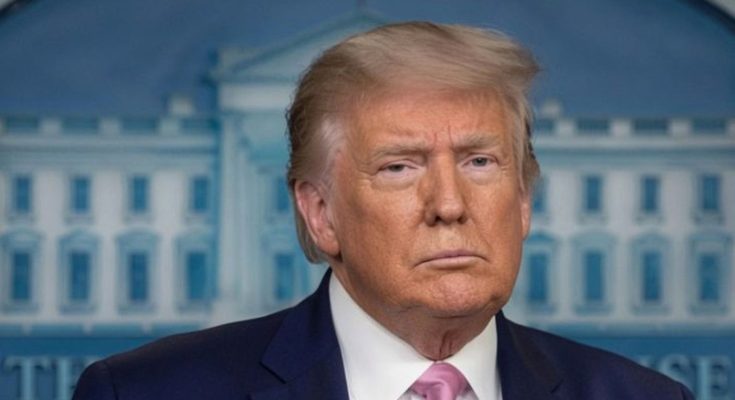
During a high-stakes address on Thursday afternoon, President Donald J. Trump brought a crowded Washington auditorium to a complete standstill.
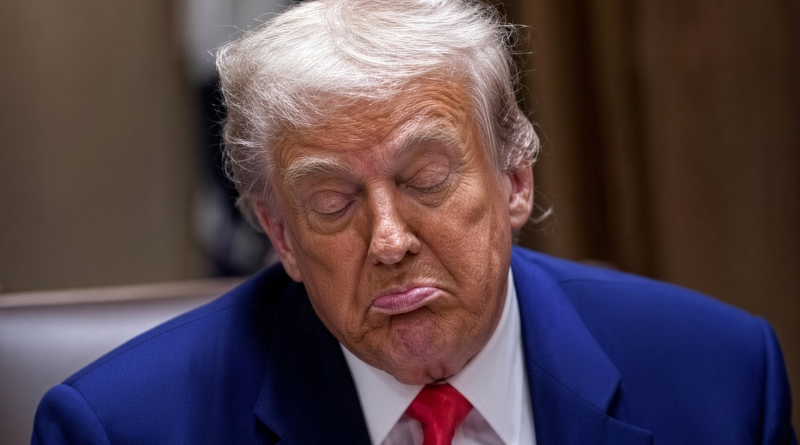
Departing from the booming rhetoric and high-octane delivery that typically define his public appearances, the President commanded the national stage with a prolonged, contemplative pause—a brief moment of stillness that instantly went viral, sparking fierce debate over the shifting dynamics of modern political communication and the art of executive presence.
The scene unfolded inside a packed Washington venue where lawmakers, foreign dignitaries, and national press had assembled, fully anticipating a standard, combative stump speech.
From the outset of his political career, Donald Trump’s communication strategy has been characterized by volume, velocity, and an unfiltered willingness to dismantle political adversaries in real time.
Yet, as the President stepped up to the lectern, the expected cadence took an unforeseen turn.
Instead of launching into an immediate attack on legislative opponents or a rapid-fire recitation of administrative accomplishments, Trump halted.
For several long, heavily weighted seconds, he said nothing at all. He stood quietly, sweeping his gaze across the auditorium with a measured, unblinking intensity.
Witnesses on the ground reported an immediate, palpable shift in the room’s atmosphere.
The customary buzz of the crowd softened into an uneasy hush, replaced only by the synchronized, rapid-fire clicking of dozens of camera shutters echoing through the hall.
Rather than projecting weakness or hesitation, the silence carried a heavy, calculated weight.
In a city where public figures rarely surrender a single second of airtime, the sheer unpredictability of the pause forced every broadcast lens and every attendee to lock their focus entirely on the man behind the podium.
Within minutes of the speech concluding, the brief interval of silence had broken free from the confines of the room, evolving into a viral cultural phenomenon across the digital landscape.
Short clips isolating the pause spread rapidly across platforms like X and Truth Social, accumulating tens of millions of views in mere hours. The intense, divergent interpretations of the moment highlighted the starkly polarized nature of modern political analysis:
The Critical Counter-Narrative: Conversely, political opponents and progressive analysts sought to contextualize the moment differently, framing the stillness as either a routine, natural breath in public speaking or an intentional theatric designed to manufacture controversy out of thin air.
Yet, the very fact that a five-second pause could dominate the editorial boardrooms and drive a 48-hour cable news cycle served as undeniable evidence of Trump’s enduring ability to dictate the national conversation with minimal effort.
In the higher echelons of political communication, silence is often recognized as one of the most difficult yet potent rhetorical tools. While spoken words are subject to immediate fact-checking, transcription, and rebuttal, a deliberate silence functions as an open canvas.
Public relations specialists and rhetorical scholars noted that the pause capitalized on a core psychological principle of mass media: human audiences naturally rush to fill an empty void with their own expectations, anxieties, and political projections.
By refusing to speak immediately, the President forced the assembled press corps to wait on his terms, disrupting the standard rhythm of political press coverage.
The move demonstrated an intuitive grasp of televisual pacing, proving that in a media landscape saturated with constant noise, sudden and total silence can be far more disruptive than the loudest megaphone.
The broader significance of the moment lies in its contrast with the conventional political class.
The standard Washington playbook relies heavily on scripted talking points, carefully calibrated teleprompter delivery, and an aversion to awkward pauses.
Politicians are traditionally trained to avoid dead air at all costs.
Trump’s performance subverted that model entirely.
Following the viral pause, he pivoted smoothly back into the core pillars of his America First agenda—touching on economic policies, deregulation, and judicial appointments—without ever acknowledging or explaining the silence that had just transpired.
The White House declined to issue a formal statement or offer a defensive clarification regarding the gesture, treating the pause as entirely self-explanatory.
By leaving the moment unaddressed, the administration allowed the media to consume itself with speculative analysis, reinforcing the perception that the political apparatus continues to react to the President, rather than the other way around.
As the news cycle churns forward, the viral episode in Washington underscores a fundamental reality of contemporary governance: the boundaries between public policy, personal branding, and theatrical optics have permanently blurred.
Whether the pause was born of a fleeting personal reflection, an astute instinct for television drama, or simply a momentary pause to gather his thoughts, the effect was singular.
WHAT’S NEXT
In a city that perpetually talks over itself, Donald Trump demonstrated that the most effective way to command the undivided attention of the free world is sometimes not to say a single word.